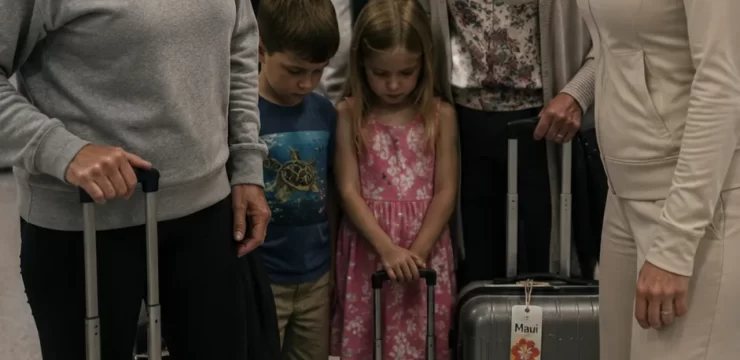
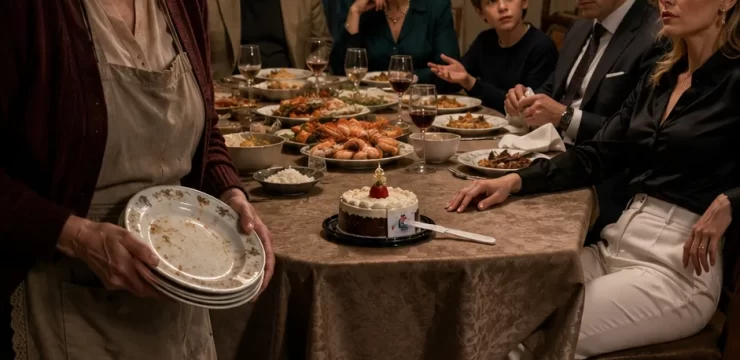
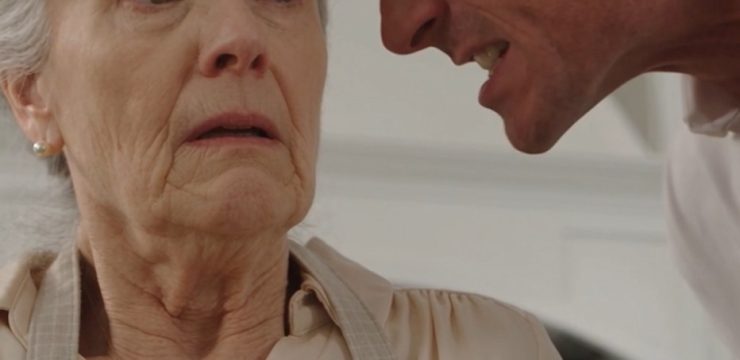
“We’re not wasting our lives on a dying old woman.”
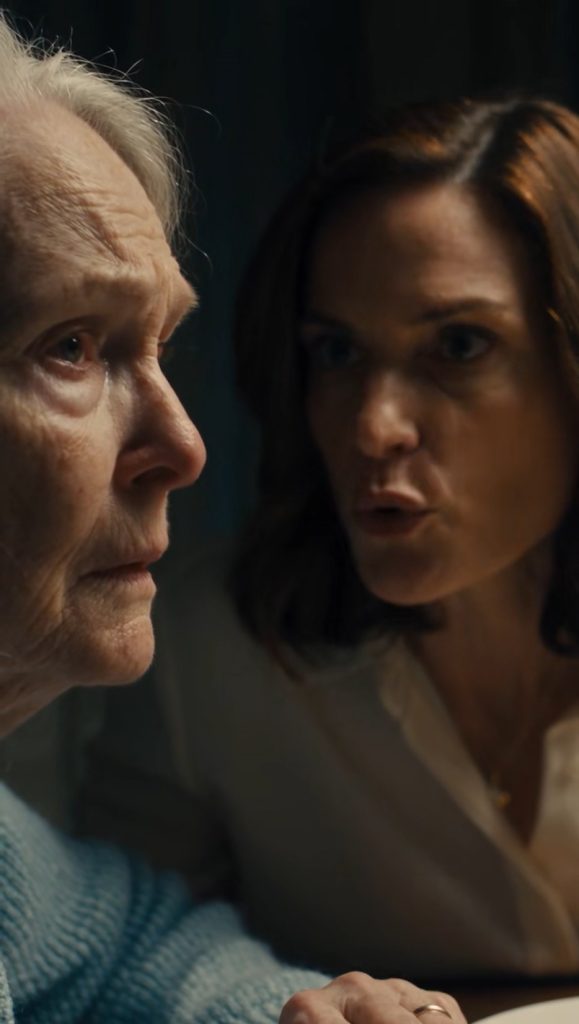
The words landed harder than the diagnosis ever had. Four days after being told there was something seriously wrong inside my body, I stood in my own living room and watched my daughter lift her bag from the floor as if abandoning me were simply another appointment she needed to keep.
My two sons followed her.
Neither of them looked back.
Twenty minutes later, my phone rang.
The name on the screen was Dr. Castellin.
And before that call ended, I would understand something about my children that sixty-three years of life had never prepared me to face.
Until that week, I genuinely believed I had raised three decent people.
My name is Eleanor Kingsley, and I live in Savannah, Georgia, in the same modest two-story house my husband Thomas and I bought thirty-one years ago. It has a wraparound porch, worn stairs, and floorboards that creak in places only I know.
Thomas died six years ago from a heart condition neither of us saw coming.
By then, our children were adults, building lives that seemed to leave less room for me every year. Visits became phone calls. Phone calls became birthday messages. Eventually, even those began arriving late.
Holden, my eldest, is thirty-six and works in commercial real estate. He drives a car worth more than I earned in two years at the accounting firm where I spent half my career.
He has never needed to raise his voice to dominate a room.
He simply expects things to move around him.
Tessa is thirty-three, a marketing consultant with Thomas’s eyes and a talent for making something cruel sound perfectly reasonable. For years, I called her stubbornness ambition because mothers become very skilled at finding kinder words for their children’s sharpest edges.
Dashel, thirty, has always been quieter.
He works somewhere in finance, doing something involving numbers and other people’s money. As a child, he checked the front door twice every night before sleeping. As an adult, he still startles at sudden noises, but numbers no longer seem to frighten him at all.
Then there is Hazel.
Tessa’s seventeen-year-old daughter is the only person under forty who still calls me without needing anything.
Sometimes she just wants to talk.
For a long time, Hazel was the reason I convinced myself there must still be something good holding this family together.
Thomas and I had built everything slowly.
He sold insurance. I balanced ledgers. We paid for braces, tutoring, school trips, broken appliances, college deposits, and every small emergency that seemed enormous when our children were young.
We were never wealthy.
But when our children needed something, we found a way.
I believed that kind of love stayed inside people.
I thought years of packed lunches, late-night fevers, scraped knees, tuition checks, Christmas mornings, and Sunday dinners became part of a person’s foundation.
Now I wonder if parenting is sometimes just hope dressed up as hard work.
Four days before my children walked out, I sat alone in an exam room at Savannah Memorial while Dr. Castellin turned her monitor toward me.
Gray shadows filled the screen.
“The mass has grown since your last imaging,” she said carefully.
Suddenly, the fatigue made sense.
So did the pain in my back and the weight I had lost without trying.
Dr. Castellin folded her hands.
“I want to be honest with you, Eleanor. This is advanced. We’re looking at a serious diagnosis.”
I remember staring at her.
Not crying.
Not moving.
Just thinking about my children.
I thought whatever disagreements we had would disappear the moment they heard.
I thought family would become family again.
Four days later, Tessa stood in my living room and proved how terribly wrong I had been.
Then Holden left.
Then Dashel.
The front door closed, and the house became completely silent.
Twenty minutes later, sitting alone in my kitchen, I answered Dr. Castellin’s call.
“Eleanor,” she said, her voice different now. “We need to talk about your results.”
I slowly lowered myself toward the floor as she began explaining what they had discovered.
Nobody who had walked out of that house was prepared for what came next. 👇
Dr. Castellin paused long enough that I could hear the refrigerator humming behind me.
“The pathology review came back,” she said. “Eleanor, you do have cancer. But it is not behaving the way the first imaging made us fear.”
I pressed one hand against the cabinet.
She explained that a second specialist had reviewed the biopsy and found a marker that changed the treatment plan completely. The disease was serious, but treatable. There were options. Real ones. She wanted me back at the hospital the next morning to meet the oncology team.
“I need you to hear me clearly,” she said. “This is not the same thing as being told you are dying.”
For several seconds, I said nothing.
Then I slid down the cabinet and sat on the kitchen floor.
And I laughed.
It came out wrong—half laugh, half sob. Four days earlier, I had heard the word advanced and imagined the worst. My children had done the same thing. The difference was that I had been afraid of leaving them.
They had been afraid of having to stay.
My phone buzzed while Dr. Castellin was still talking.
Tessa.
I let it ring.
A minute later, a message appeared.
When you’re ready, send me where you keep the house papers and insurance information. We should get organized before things become complicated.
I stared at the screen.
Not How are you?
Not I’m sorry.
Paperwork.
That was when the laughter stopped.
The next morning, I went to Savannah Memorial alone. At least, I thought I did.
Hazel was sitting in the oncology waiting room when I stepped out of the elevator.
She stood so fast that the magazine on her lap fell.
“Grandma.”
Her eyes were swollen, and she was gripping her backpack.
“Your mother knows you’re here?”
Hazel looked down. “She knows I left the house.”
That answer told me enough.
She crossed the room and wrapped her arms around me.
“I’m sorry,” she whispered. “I heard what she said.”
Something inside me cracked.
I had managed the diagnosis without crying. I had watched my children leave without crying. But with Hazel’s cheek against my shoulder, I could no longer pretend it had not hurt.
“I’m not dead,” I whispered.
“I know.”
“And I’m not planning to be.”
“I know that too.”
Treatment began the following week.
Holden called twice. Both times, he asked practical questions in a voice so smooth it made my skin crawl. Had I updated my will? Was the house paid off? Did I still have Thomas’s insurance records?
I answered none of them.
Tessa became angry when silence stopped working for her.
“You’re making this harder than it needs to be,” she said.
“For whom?”
There was a pause.
That pause told me enough.
Dashel did not call for nine days.
Then, one rainy evening, I opened the front door and found him standing on the porch without an umbrella.
“I was a coward,” he said.
No excuse. No speech.
Just that.
I nearly closed the door.
He swallowed. “I followed them because I didn’t know what to do, and then every hour I waited made coming back harder.”
“You heard what she said to me.”
“Yes.”
“And you left anyway.”
His face tightened.
“Yes.”
I let the silence sit between us.
Then he placed my spare key on the porch railing.
“I don’t deserve to use this anymore,” he said. “But if you ever need me, I’ll come when you ask.”
I did not forgive him that night.
But I did not close the door either.
Two months into treatment, Tessa and Holden came together.
They arrived on a Sunday afternoon carrying concern like a costume.
Tessa brought flowers. Holden brought a folder.
Hazel, who had been helping me prepare soup, went still.
“What’s in the folder?” I asked.
Holden smiled. “Just some estate-planning documents.”
Hazel’s spoon hit the counter.
“Tell her the truth.”
Tessa turned sharply. “Hazel.”
“No.”
My granddaughter’s voice shook.
She looked at me.
“Mom and Uncle Holden thought you were going to leave them the house. They’ve been talking about selling it since before they left that day.”
The room went silent.
Holden’s smile disappeared.
Tessa stepped toward her daughter. “You don’t understand adult conversations.”
“I understood you saying Grandma wouldn’t be around long enough to object.”
I felt something cold settle inside me.
Holden opened his mouth.
I raised one hand.
“No.”
One word.
For once, the room became smaller around him.
I told them I had already met with an attorney.
The house would remain mine for as long as I wanted it. My savings would pay for my care and my life, not preserve anyone else’s expectations. What remained someday would go through a trust protecting Hazel’s education and supporting a patient-assistance fund at Savannah Memorial.
Tessa stared at me.
“You’re punishing us.”
“No,” I said. “I’m finally stopping myself from rewarding you.”
Holden left first.
Tessa followed, but not before looking at Hazel.
“You’re coming with me.”
Hazel lifted her chin.
“No. Dad is picking me up.”
That was the moment Tessa understood she had lost more than an inheritance.
The next months were not easy.
There were mornings when food tasted like metal and nights when my bones ached too deeply for sleep. Hazel sat with me when she could. Dashel drove me to appointments without trying to turn his guilt into a performance.
Forgiveness came slowly.
It came when he remembered which crackers I could tolerate after treatment. When he fixed the porch step Thomas had promised to repair. When he stopped saying “I’m sorry” and started behaving like someone who understood what the apology required.
By spring, my scans were clear enough for Dr. Castellin to use the word remission.
I cried then.
Not because I had defeated death, but because I had been given time—and finally understood that time did not have to be spent proving my love to people who treated it like a resource.
Tessa sent a birthday card.
Holden sent nothing.
I kept the card but did not mistake it for reconciliation.
Some wounds close without restoring what was there before.
On my sixty-fourth birthday, Hazel came over with a chocolate cake leaning slightly to one side.
Dashel carried it behind her, pretending the tilt had nothing to do with his driving.
We ate on the porch as evening settled over Savannah.
Before he left, Dashel checked the front door once.
Then he stopped and smiled faintly.
“When I was a kid, I always checked it twice.”
“I remember.”
He touched the lock, then stepped back.
“I think once is enough now.”
Hazel slipped her hand into mine.
The floorboards creaked beneath us in their old familiar language.
For years, I thought Thomas and I had failed because two of our children had learned to measure love by what they could receive.
But sitting there with Hazel beside me and Dashel laughing softly at the crooked cake, I finally understood the part I had missed.
Love had grown.
Just not everywhere we planted it.
And as the porch light came on, warm against the dark, I realized I was no longer waiting to see who would stay.
I already knew.