The applause was still echoing when the insult landed.
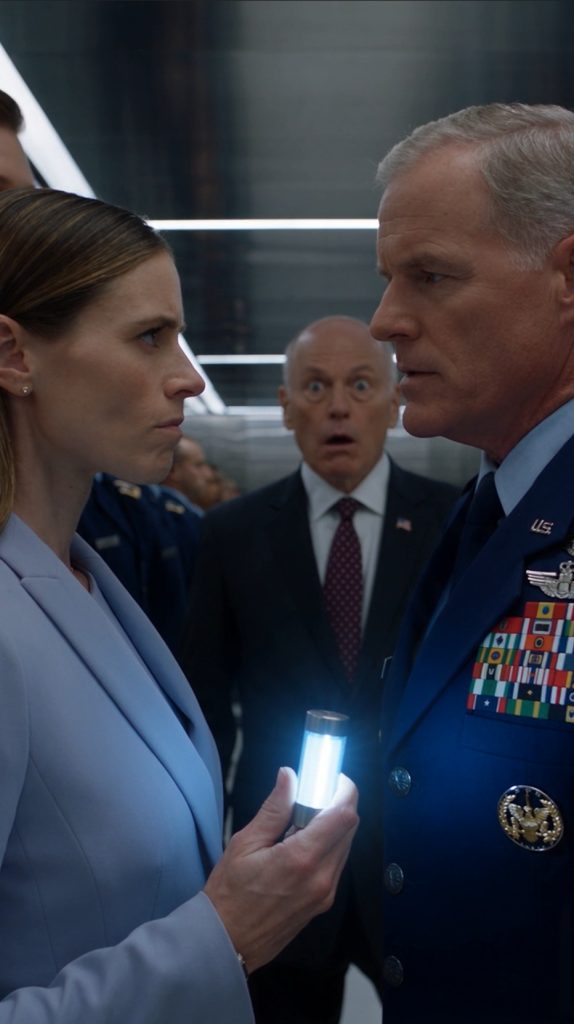
My brother stood beneath the bright auditorium lights with a Navy SEAL trident pinned to his chest, looked straight at me, and smiled as if he had been waiting years to say it.
“Must be tough watching someone actually make it all the way to the finish.”
My father heard him.
And said nothing.
Daniel found me near the rear wall of the naval auditorium, surrounded by flashing cameras, white uniforms, proud families, and senior officers. His uniform was immaculate. The gold trident gleamed beneath the harsh overhead lights.
My mother pressed a monogrammed handkerchief to the corner of one eye while my father, retired Navy Captain Robert Hayes, introduced Daniel to every important person who passed.
“My son,” he kept saying.
Never “my children.”
There had been no seat saved for me beside the family.
So I stood alone in a gray blazer, black heels, and a visitor badge clipped neatly to my lapel.
Daniel made sure two of his teammates were close enough to hear him.
“Honestly didn’t think you’d show up.”
His eyes moved slowly over my clothes. Then came the smirk I remembered from every family gathering.
“Must feel strange watching someone actually finish what they started.”
One teammate glanced at the floor.
The other shifted his weight.
My father looked away.
For twelve years, my family had repeated the same version of my life until it became fact to everyone except me.
Samantha left the Naval Academy.
Samantha couldn’t handle the pressure.
Samantha sells insurance now.
At Thanksgiving dinners, weddings, Christmas gatherings, retirement parties, I had become the cautionary tale my father used whenever Daniel needed to look more impressive.
I stared at the trident on my brother’s chest.
And stayed silent.
Because the truth becomes dangerous when the people mocking you do not have the clearance required to hear it.
Beneath my blazer, a secure phone rested against my ribs.
Ten minutes earlier, while everyone around me had been applauding Daniel, it had vibrated once on a priority channel.
EXTRACTION CONFIRMED.
ALL PERSONNEL ACCOUNTED FOR.
No names.
No coordinates.
Nothing anyone in that auditorium was authorized to see.
I had locked the screen and slipped the phone away.
Somewhere far from that ceremony, men my family would never meet were still alive because of decisions made inside rooms my father did not even know existed.
But to him, I was still nineteen.
Still standing beside an oak dining table while he slammed his palm against the wood and told me I had brought shame to the Hayes name by leaving the Academy.
Daniel leaned closer.
“Don’t worry. Nobody expects you to understand what any of this really means.”
My father stepped between us wearing the polished public smile he had perfected years ago.
He put a hand on Daniel’s shoulder.
“Come meet the admirals. Today is your day.”
Then his eyes turned to me.
The warning was immediate.
“Samantha, let’s not make things uncomfortable.”
For one second, I almost laughed.
I had not said a word.
Then the room changed.
The band stopped mid-piece.
Conversations vanished one after another as senior officers near the VIP section straightened and people instinctively moved aside.
General Thomas Carter had entered.
Four stars.
My father saw him first.
His posture stiffened. He guided Daniel half a step forward, already arranging the photograph in his mind—the retired captain, the newly minted SEAL, and one of the most powerful officers in the room.
Daniel raised his hand in greeting.
General Carter walked directly toward us.
Then passed them both.
Daniel’s hand remained frozen in the air.
My mother stopped moving, the handkerchief still pressed against her cheek.
My father turned so sharply his polished shoe scraped across the floor.
The general was looking at me.
Only me.
He stopped three feet away, noticed the edge of the secure phone beneath my blazer, and something in his expression changed.
Recognition.
Then relief.
“Samantha Hayes.”
The officers closest to us went silent.
He extended his hand.
“You’re here? After everything that happened this morning, I never expected to find you standing in this room.”
Daniel’s face tightened.
“What happened this morning?”
The general did not answer him.
His eyes remained on me.
“Did Washington confirm the extraction?”
My father’s smile disappeared.
I reached beneath my blazer and removed the secure phone. Its pale light spread across my palm as General Carter read the message.
Then he slowly turned toward my father, my brother, and the officers now gathering around us.
“Captain Hayes,” he said quietly, “you told me your daughter had left the Navy.”
My father swallowed.
General Carter reached inside his dress coat.
And withdrew a sealed black folder.
Nobody in that room was prepared for what he was about to reveal. 👇
The black seal cracked softly under General Carter’s thumb.
It was the smallest sound in the auditorium, yet somehow it carried farther than the band had.
My father stared at the folder. Daniel’s hand had finally dropped to his side. I could see the pulse moving hard in his throat.
General Carter looked at me before he opened it. “Your decision.”
That was the part no one else understood. He was not asking whether I wanted the truth told. He was asking how much of it I was willing to let become public.
For twelve years, I had protected classified work without hesitation. Protecting my family from their own cruelty had never been part of the mission.
I met my father’s eyes.
“Use the releasable page.”
Carter nodded once.
He removed a single sheet, most of it marked by thick black redactions, and held it low enough that only the people nearest us could see. My name remained visible at the top.
“Samantha Hayes did leave the Naval Academy at nineteen,” he said.
My father exhaled, almost in relief.
Carter’s gaze sharpened.
“She did not leave the Navy.”
The relief vanished.
He explained only what he was authorized to explain. Six months after I left Annapolis, I entered a different commissioning path and eventually moved into naval intelligence, then into a joint special operations cell whose work did not appear on ordinary biographies, promotion announcements, or family Christmas letters.
My mother’s handkerchief slipped from her fingers.
Daniel stared at me as if the floor had moved.
Carter tapped the page. “For the last several years, Commander Hayes has coordinated recovery operations involving personnel our country cannot afford to lose. This morning’s extraction succeeded because she made a decision under conditions I will not discuss in this room.”
Commander.
The word seemed to strike my father physically.
“No,” he said under his breath.
General Carter turned toward him. “No?”
My father’s face had gone pale. “She sells insurance.”
For the first time, Carter looked almost tired.
“That is what her cover allows people without clearance to believe.”
Silence swallowed the space around us.
Daniel’s two teammates were no longer looking at the floor. One of them straightened instinctively. The other looked from my secure phone to the redacted page, then back to me.
Daniel whispered, “You outrank me?”
I looked at him.
“This isn’t about rank.”
His mouth opened, but nothing came out.
My father stepped closer to Carter. “There has to be some mistake. She quit. I was there.”
“So was she,” Carter said.
The sentence landed harder than a shout.
He slid another document halfway from the folder, then stopped. His eyes moved to me again.
I knew that page.
I had seen it only once, during a security review years earlier. A letter written by my father after I left the Academy, addressed to an old classmate in personnel command. In it, he called me unstable under pressure, lacking in perseverance, and unworthy of being trusted with responsibility.
He had tried to make his private disappointment part of my permanent record.
I had never confronted him.
Carter’s hand stayed on the page. “This one is not classified.”
My father saw the letterhead and went still.
“Don’t,” he said.
Not to me.
To the general.
Daniel turned slowly toward him. “What is that?”
My father’s jaw tightened. “Nothing that matters now.”
“It mattered when you wrote it,” I said.
His eyes snapped to mine.
For the first time that day, I saw fear there.
General Carter handed the page to Daniel.
My brother read the first lines. The color drained from his face.
“You tried to stop her from serving?”
“I was protecting the Navy.”
“No,” my mother said.
Her voice was so quiet that everyone leaned toward it.
She bent, picked up her handkerchief, and folded it once with trembling fingers.
“You were protecting yourself.”
My father looked at her as if she had struck him.
She continued, each word unsteady but clear. “You couldn’t bear having a daughter whose life didn’t follow the version you had planned. So you called her a failure until the rest of us learned to repeat it.”
He looked around for support.
There was none.
The admirals he had been so eager to impress stood several feet away, their faces unreadable. Daniel’s teammates had stepped back from him. Even Daniel held the letter as though it had become something dirty.
My father’s shoulders seemed to shrink inside his tailored jacket.
“I gave this family everything.”
“You gave us a standard,” Daniel said, his voice rough. “And if we didn’t meet it, you gave us shame.”
That was when my father’s power broke.
Not when the general corrected him.
Not when my rank became known.
When the son he had spent years holding up as proof of his success looked at him and refused to keep carrying the story.
My father reached for the letter.
Daniel pulled it back.
“No.”
One word.
Final.
Carter closed the folder.
“Captain Hayes, that letter was preserved because Commander Hayes’s investigators found it during her clearance process. It did not end her career. It did, however, become part of the record showing the obstacles she overcame.”
My father stared at me.
“You knew?”
“For years.”
“And you never said anything?”
“What would I have said?” My voice stayed level, though my hand had begun to shake around the phone. “You had already decided who I was.”
His face changed then. The anger went first. What remained looked older.
“I thought you needed to learn not to quit.”
I swallowed.
“And I learned something else.”
He waited.
“I learned I could survive you being disappointed in me.”
No one moved.
Then Daniel took the trident from his chest.
My mother made a small sound, but he only held it in his palm, staring at it.
“All morning,” he said, “I thought this proved I was better than you.”
I looked at the pin.
“It proves you earned it.”
His eyes lifted.
“That’s all it ever had to prove.”
His face folded for half a second before he caught it. He pinned the trident back onto his uniform with clumsy fingers.
“I’m sorry,” he said.
Not loudly. Not theatrically.
“I’m sorry I used Dad’s version of you because it made me feel bigger.”
I could have made him suffer.
Part of me wanted to.
Instead, I said, “Then don’t use it again.”
He nodded.
“That’s fair.”
General Carter glanced toward the front of the auditorium. “There is one more matter.”
I closed my eyes briefly. “Sir.”
A faint smile touched his face.
“You were supposed to let me do this before you hid at the back of the room.”
Daniel frowned. “Do what?”
Carter reached into the folder again and removed a cream-colored card.
It was not classified.
It was a seating card.
My name was printed across it beneath two words: DISTINGUISHED GUEST.
My mother covered her mouth.
Carter looked almost amused now. “Commander Hayes asked that her recognition be moved until after the SEAL graduates had finished with their families. Specifically, she said she did not want to take attention from her brother’s day.”
Daniel stared at me.
The shame on his face was worse than anger would have been.
“You knew they were going to recognize you?”
“Yes.”
“And you stood back there while I—”
“Yes.”
He pressed his lips together.
Carter’s expression softened. “The commendation is for work conducted over several years. Today’s operation was not part of the citation. Washington simply happened to confirm the extraction while we were here.”
My father lowered his eyes.
The beautiful irony of it settled over the room with almost unbearable quiet. There had been no seat for me beside my family because they had not saved one.
There had been a seat for me in the front row all along.
I had chosen not to take it.
Carter handed me the card.
For years, my family had mistaken my silence for emptiness.
Now they finally understood it had been restraint.
The formal presentation was brief. No operational details. No dramatic speech. Just my name, a sanitized citation, and a room full of officers rising to their feet.
The applause felt different from Daniel’s.
Not louder.
Heavier.
I found myself looking at my mother instead of the crowd.
She was crying openly now, but she was not clapping at first. Both hands were pressed against her mouth.
When she finally lowered them, she mouthed, I’m sorry.
I nodded once.
Not forgiveness.
Not yet.
But a door.
Outside the auditorium, the afternoon air smelled faintly of salt and hot pavement. Families clustered beneath banners, taking photographs while gulls turned above the waterfront.
Daniel found me near the steps.
For once, he approached without an audience.
“I don’t know how to talk to you now,” he said.
“Try without competing.”
He gave a short, broken laugh.
“I deserved that.”
“You did.”
He looked toward the parking lot, then back at me. “Did you ever hate me?”
I thought about Christmas dinners. The jokes. The smirks. Every time he had accepted being the golden child because it was easier than asking what it cost me.
“Sometimes.”
He nodded as though he needed the answer to hurt.
“But mostly,” I said, “I missed you.”
His eyes reddened.
He stepped forward, stopped, and waited.
That hesitation mattered.
I closed the distance myself.
His hug was careful at first. Then his shoulders shook once beneath my hands.
Behind him, my mother stood several yards away with my father.
She came alone.
“I believed him because believing him was easier than admitting I had failed to ask you a single real question,” she said.
I looked at her handkerchief twisted between her fingers.
“You called me a dropout too.”
“I know.”
“You laughed at those stories.”
Her chin trembled.
“I know.”
This time, when she reached for me, I did not move immediately.
Then I took her hand.
My father remained near the curb.
He did not approach until Daniel had gone to rejoin his teammates and my mother had stepped away to collect herself.
Without the auditorium around him, he looked less like Captain Robert Hayes and more like an aging man who had discovered that authority could not order back twelve lost years.
“I don’t expect you to forgive me,” he said.
“Good.”
He flinched.
I hated that part of me felt relief.
He looked down at his hands. “I was wrong about you.”
“That’s not the worst thing you did.”
“I know.”
“You taught everyone else to be wrong about me too.”
His eyes closed.
“Yes.”
The apology that followed was not elegant. He stopped twice. Started again. Admitted the letter. Admitted the stories. Admitted that Daniel’s success had become a weapon he used against me because he could not control the direction of my life.
I listened.
Then I told him the only thing I could honestly give him.
“You can spend the rest of your life becoming someone I might want to know. But you don’t get to decide when I’m ready.”
He nodded slowly.
“I understand.”
For once, he did not argue.
Months passed before I sat at the same oak dining table again.
The dent from his palm was never really there, of course. Memory had simply placed one in the wood.
Daniel arrived wearing jeans instead of a uniform. My mother burned the rolls. My father asked me about work, caught himself, and changed the question.
“Is there anything you can tell us?”
I smiled.
“A little.”
That became our new language.
A little.
Enough.
Daniel never called me a dropout again. More importantly, he stopped letting anyone else do it. My mother learned to ask before assuming. My father learned that silence at a table was not permission to fill it with his version of someone else’s life.
And I learned that coming home did not require pretending the house had never hurt me.
Near the end of dinner, Daniel disappeared into the hallway and returned carrying a small wooden box.
He placed it beside my plate.
Inside was the seating card from the ceremony, now framed beneath glass.
DISTINGUISHED GUEST.
Under it, in Daniel’s handwriting, were six words.
YOU ALWAYS HAD A SEAT HERE TOO.
For a moment, I could not breathe.
My father looked away, his eyes shining. My mother reached across the table but stopped halfway, letting me choose.
I turned my hand palm-up.
She took it.
Daniel sat beside me.
Outside, rain moved softly against the windows. The house smelled of overcooked bread and coffee, and nobody was performing for anyone anymore.
I looked around the table that had once been the place where my father told me I had brought shame to our name.
Then I looked at the people sitting there now, imperfect and quieter and finally willing to know me.
I set the little framed card in the center of the table.
And for the first time in twelve years, I did not feel like a visitor in my own family.