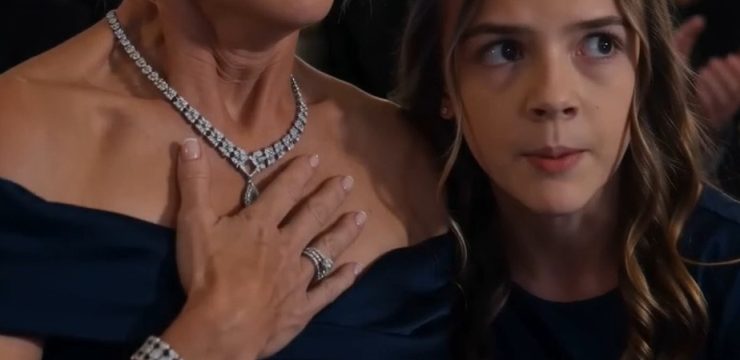
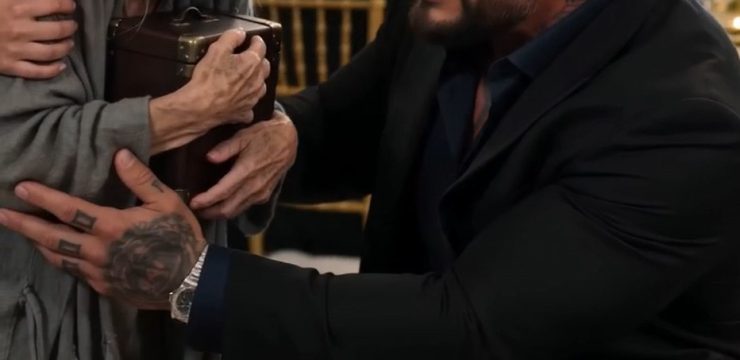
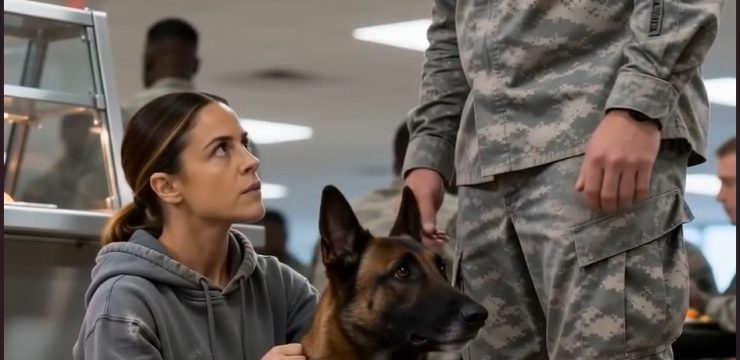
The entire room went silent when the General placed a sealed folder on the table. One officer had spent the last five minutes humiliating a woman he believed was beneath him. Now, with a single document lying between them, his military career—and possibly his freedom—hung in the balance.

Minutes earlier, Colonel Eric Hale had been laughing.
“You’re sitting at a table reserved for people who make decisions,” he told Major Rachel Foster, his voice loud enough for the surrounding officers to hear.
He glanced at the documents in her hands.
“Not people who carry reports.”
Rachel remained seated. She looked down at the name card positioned neatly in front of her, then raised her eyes to meet his.
“My name is here, Colonel.”
Hale gave a dismissive smile.
“Then somebody made a mistake.”
A few officers exchanged uncomfortable glances. Nobody intervened. Hale was a senior officer, accustomed to having the final word, and Rachel understood exactly what he was trying to do.
He wanted her to stand up. To gather her papers, accept the embarrassment, and leave the seat he believed belonged to someone more important.
But Rachel didn’t move.
Her fingers rested against the edge of the table. She had spent months examining financial records, following transactions that seemed ordinary until she compared them side by side.
And now the man standing before her was demanding that she leave.
Before Hale could speak again, the door opened.
The General entered.
“Major Foster.”
Hale immediately straightened, his expression shifting into the practiced confidence of an officer greeting a superior.
But the General barely acknowledged him.
Rachel rose as he approached. Without ceremony, he placed a sealed financial file directly beside her name card.
“Audit complete.”
Two words.
Hale’s smile disappeared.
Rachel opened the folder slowly. The first documents confirmed what her investigation had uncovered: three military contractors had received duplicate payments.
Hale leaned forward.
“Accounting,” he said quickly, as though the explanation were obvious. “That sounds like an accounting problem.”
Rachel didn’t argue.
She turned another page.
The three companies appeared independent on paper, with separate contracts and business registrations. But the ownership records revealed something the contractors had never disclosed.
All three businesses shared the same silent owner.
Colonel Hale’s brother.
For the first time, Hale seemed unable to find the right words. His gaze moved from the documents to the General, searching for some indication that this was a misunderstanding.
There was none.
Rachel placed another set of records beside the contracts.
Bank transfers.
The money had moved through the contractors and into an account controlled by Hale’s wife.
Every transaction was documented. Dates, amounts, account details—each piece connecting the payments to the people closest to him.
Hale stared at the pages.
His earlier laughter seemed impossibly distant now.
Around the table, officers who had remained silent during Rachel’s humiliation were watching the Colonel with growing unease. The woman he had dismissed as someone who merely carried reports had brought evidence that could destroy him.
Then movement near the doorway drew everyone’s attention.
Military police had entered the room.
The General folded his arms.
Rachel looked directly at Hale.
“You were worried somebody important would need this table.”
She allowed the silence to settle before closing the folder.
“They do.”
Hale turned toward the exit.
Two military police officers stood in his path.
He stopped.
Rachel watched him for a moment, then reached for another document inside the file. Unlike the financial records, this page contained something far more personal.
As she unfolded it, Hale’s face drained of color.
He seemed to recognize it before anyone else could see what was written.
Rachel lifted her eyes.
“Your emails,” she said.
And for the first time that morning, Colonel Hale looked genuinely afraid of what she might read aloud. 👇
Hale reached across the table.
“Those are private communications.”
Rachel drew the document back before his fingers touched it.
“They were obtained under lawful authorization, Colonel. And they concern military contracts.”
The General pulled out the chair beside her but remained standing.
“Proceed, Major.”
Rachel glanced at the first message. Its timestamp was six weeks before the initial duplicate payment.
She read the words slowly.
“Keep the ownership arrangements separate from the procurement paperwork. Nobody should be able to connect the companies to us.”
Hale’s jaw tightened.
“You’re taking that out of context.”
Rachel placed a second email beneath the first.
“Then explain this one.”
The message instructed a contracting officer to approve a payment despite an unresolved discrepancy. Attached was a spreadsheet matching the figures Rachel had spent months tracing.
The officer sitting nearest Hale lowered his gaze.
Rachel noticed.
So did the General.
“Captain Morris,” the General said, “you reviewed these payments?”
Morris swallowed.
“Yes, sir.”
“Were you aware of the discrepancies?”
Morris looked toward Hale, who gave him a small, almost imperceptible shake of the head.
For a moment, nobody breathed.
Then Morris answered.
“I reported them, sir.”
Hale turned sharply.
“You reported routine processing errors.”
“No, Colonel.” Morris’s voice cracked. “I reported payments that had already been made.”
The room seemed to grow smaller.
Rachel knew Morris’s name. His original report had been among the first records she discovered, buried in a closed administrative file.
The report carried a handwritten notation.
No further action required.
And beneath it, Hale’s signature.
Rachel slid the document forward.
“Captain Morris was transferred from procurement three days after submitting this.”
Hale’s face reddened.
“Personnel assignments are command decisions.”
“They are,” the General replied. “Retaliation is not.”
Hale looked around the room, searching for an ally. The officers who had once laughed at his remarks now avoided his eyes.
Then he pointed at Rachel.
“You think she’s innocent? Ask her why she kept investigating after being ordered to stop.”
Rachel’s hand went still.
For months, she had known this question might come.
The General turned toward her.
“Major?”
Rachel stood straighter.
“Because the order came from a person named in the financial records, sir.”
Hale gave a bitter laugh.
“Convenient.”
Rachel looked at him.
“No. It wasn’t.”
She opened another page.
“My first request for an independent review was denied. My second disappeared from the tracking system. After my third, I was informed that my performance was under review.”
Her voice remained steady, but her fingers pressed hard against the paper.
“I was told that if I continued, I could lose my assignment.”
Morris stared at her.
“You never told me.”
Rachel shook her head.
“You had already paid enough for speaking up.”
The General’s expression hardened.
“Hale, did you interfere with Major Foster’s investigation?”
“I protected this command from an officer making accusations she couldn’t prove.”
Rachel reached for the last email.
“Then there’s something else you should know.”
Hale’s confidence flickered.
The message had been sent from his official account to his brother.
It contained no vague instructions or ambiguous language.
“Move the remaining funds before Foster obtains the bank records. If she keeps asking questions, make her career the issue.”
Rachel stopped reading.
A chair scraped against the floor.
Morris had risen halfway before realizing it. He slowly sat again, one hand covering his mouth.
The General extended his palm.
Rachel handed him the email.
He read it once.
Then again.
“Hale,” he said quietly, “do you deny sending this?”
Hale opened his mouth.
Nothing came out.
The General waited.
Finally, Hale whispered, “I want legal counsel.”
“You’ll have access to counsel,” the General replied.
He turned toward the military police.
“Escort Colonel Hale from the room.”
The officers stepped forward.
For the first time, Hale did not move.
His eyes returned to Rachel.
“You have no idea what you’ve done to my family.”
Rachel felt the words strike somewhere deeper than she expected.
She thought of the account controlled by his wife. His brother’s companies. The people whose names appeared throughout the investigation.
Then she answered.
“I know what the records show. I also know you had opportunities to stop.”
Hale looked away.
As the officers escorted him toward the door, his shoulder brushed the chair he had insisted Rachel didn’t deserve.
The name card shifted slightly.
Nobody corrected it.
When the door closed, the room remained silent.
The General collected the documents.
“Major Foster, there is one matter we need to discuss privately.”
Rachel followed him into the adjoining office.
Sunlight fell across the carpet, illuminating dust drifting through the air. Beyond the window, soldiers walked between buildings, unaware of what had just happened inside.
The General closed the door.
“Your investigation was thorough,” he said. “But there’s a problem.”
Rachel’s stomach tightened.
“The account belongs to Hale’s wife. His brother owns the companies. Hale issued the instructions. But we must establish what each person actually knew.”
Rachel nodded.
“I understand, sir.”
“Do you?”
He laid another document on the desk.
It was a statement from Hale’s wife, submitted through her attorney that morning.
Rachel read it.
The woman claimed that Hale had controlled the account using authorization she had signed years earlier. She said she had never seen the contractor payments until investigators contacted her.
Rachel looked up.
“Has that been verified?”
“Not yet.”
He paused.
“We also have evidence suggesting she warned someone about suspicious deposits.”
Rachel studied the statement again.
The woman whose name had made Hale’s guilt appear undeniable might herself have been deceived.
It changed nothing about his actions.
But it changed how carefully Rachel needed to proceed.
“I want every claim examined independently,” she said. “Including hers.”
The General regarded her for a moment.
“Even if it takes longer?”
“Especially then.”
He nodded.
Outside the office, footsteps passed along the corridor.
“There’s something else,” he said. “Your original audit report was recovered.”
Rachel looked at him sharply.
The report she had submitted months earlier had vanished before reaching senior command.
“Where?”
“In the archived correspondence of a retired civilian financial analyst.”
The General handed her a printed cover letter.
The analyst, Eleanor Price, had received a copy before Hale’s office intervened. Instead of discarding it, she preserved it with its original timestamps and attachments.
Rachel stared at the signature.
She knew Eleanor.
Years earlier, Eleanor had trained her to follow an accounting discrepancy until she could explain not just where the money went, but why.
Rachel had assumed Eleanor retired before the investigation began.
“She kept it?” Rachel whispered.
“She kept everything.”
The General’s voice softened.
“She also requested that your evidence be reviewed outside Hale’s chain of command. That is why the audit was finally completed.”
Rachel sat down.
For months, she had believed she was carrying the investigation alone.
She pressed her lips together, trying to steady her breathing.
The General gave her a moment.
Then he said, “There will be a formal inquiry. Your findings will be tested. Hale will have the opportunity to defend himself. We cannot promise an outcome.”
Rachel nodded.
“I don’t want a promised outcome, sir.”
“What do you want?”
“The truth to survive the process.”
It took months.
The inquiry confirmed the duplicate payments, the concealed ownership interests, and the deliberate efforts to obstruct oversight.
Independent investigators found no evidence that Hale’s wife knowingly participated in the scheme. They confirmed that her earlier warning had helped preserve records later used in the case.
Hale’s brother admitted concealing his ownership of the contracting businesses and agreed to cooperate with prosecutors.
Captain Morris testified about the transfer that followed his report. His personnel record was corrected, and he returned to meaningful procurement oversight work.
Hale continued to deny criminal wrongdoing until confronted with authenticated communications, financial records, and testimony from the officers he had pressured.
At his court-martial, he finally admitted directing the fraudulent payments and attempting to destroy Rachel’s credibility.
He was convicted, dismissed from military service, and sentenced to confinement. Restitution proceedings followed to recover the diverted funds.
The decision did not erase what had happened.
But it ended his ability to bury it.
Rachel sat in the courtroom when the sentence was announced.
Hale did not look at her.
She watched his hands instead. They rested motionless on the table where his attorney had arranged the documents.
When the hearing ended, Morris waited beside the hallway doors.
“I should have spoken up in that meeting,” he told her.
Rachel looked at him.
“You spoke up when it mattered to the investigation.”
“I still watched him humiliate you.”
She did not immediately absolve him.
After a moment, she said, “Then don’t let it happen to someone else.”
Morris nodded.
“I won’t.”
That evening, Rachel visited Eleanor Price.
The retired analyst lived in a modest house with a narrow porch and a kitchen that smelled of fresh coffee.
Eleanor opened the door before Rachel reached the bell.
For several seconds, neither spoke.
Then Eleanor stepped forward and embraced her.
Rachel held on longer than she intended.
Inside, two cups waited on the kitchen table.
“I thought you’d come,” Eleanor said.
Rachel sat down, looking at the old folders stacked neatly beside the window.
“Why didn’t you tell me you had the report?”
“Because I was advised not to interfere while the independent review was underway.”
Eleanor hesitated.
“And because I knew you’d have kept going if I told you. You needed to make your decisions without thinking someone could rescue you.”
Rachel looked down at her coffee.
“I thought nobody believed me.”
Eleanor’s face changed.
“Oh, Rachel.”
She reached across the table.
“I believed the records. And I believed the officer who refused to ignore them.”
Rachel wiped her cheek with the back of her hand.
For the first time since the meeting, she allowed herself to cry.
Not because she had won.
Because someone had been there.
Quietly, faithfully, without asking for recognition.
Weeks later, Rachel received an invitation to a small ceremony recognizing the personnel who had protected the integrity of the contracting process.
She nearly declined.
Eleanor convinced her to attend.
“Recognition doesn’t undo what happened,” she said. “But other people deserve to see what courage looks like.”
When Rachel entered the familiar conference room, she stopped.
The same long table stood beneath the bright ceiling lights.
The same polished chairs surrounded it.
But something was different.
At Rachel’s place lay a small framed document.
It was the original audit submission that Eleanor had preserved, complete with Rachel’s signature and the date it had first been filed.
Across its upper corner was the General’s handwritten note.
Received. Reviewed. Acted upon.
Beside it stood a new name card.
Major Rachel Foster.
No special rank. No grand title.
Just her name.
Morris was there. Eleanor stood near the window. Several junior officers waited quietly around the table.
The General approached.
“We’ve revised the reporting procedures,” he told Rachel. “Independent audit concerns can no longer be closed by an officer named in the complaint.”
Rachel touched the edge of the framed report.
“That matters more than this ceremony, sir.”
“I thought you might say that.”
He smiled faintly.
“That’s why we’re telling you first.”
After the remarks, the room gradually emptied.
Eleanor remained beside Rachel, studying the name card.
“Remember what I taught you?” she asked.
Rachel smiled through gathering tears.
“Follow the numbers.”
Eleanor shook her head.
“That was the second lesson.”
Rachel turned toward her.
Eleanor rested a hand over the framed report.
“The first was never confuse someone’s authority with their worth.”
Rachel looked around the room that had once seemed so cold.
Then she pulled out the chair beside her.
“Sit with me?”
Eleanor smiled.
“I thought you’d never ask.”
They sat together at the table, their coffee cooling beside the preserved report while afternoon sunlight stretched across the polished wood.
And for once, Rachel had nothing left to prove.