A frightened stray came toward a stranger’s car with a rope caught tightly around its neck. The dog was crying for help, yet fear made accepting that help difficult. It began with a person willing to be patient.

The rescuer could see the rope and understand why this animal needed attention. But a frightened dog cannot recognize kindness immediately. The dog had retreated into a hiding place, uncertain about coming forward. Rather than force the encounter, the man tried to coax the dog out gently.
He reassured the dog that he wanted to cut away the rope around its neck. His words were meant to offer comfort, without knowing how much it understood. What mattered was the kindness behind them, and the calm approach.
Eventually, the stray came out and climbed into the car.
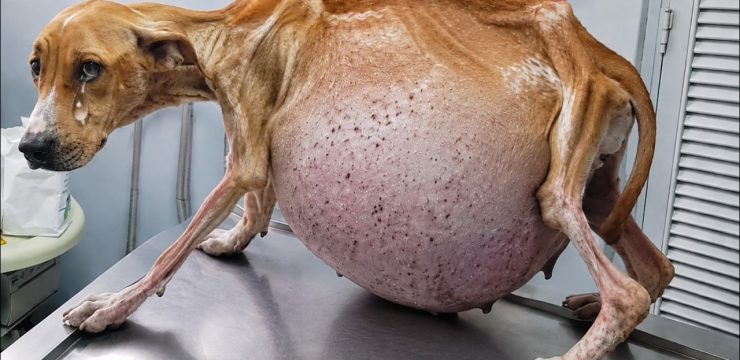
That single decision carried enormous meaning. A dog who had been hiding from a stranger was now close enough to accept his help. Another painful fact was impossible to overlook. The dog was thin. Its body showed the unmistakable signs of malnutrition, revealing how much nourishment it lacked.
There is something especially sad about seeing an animal so desperate for help and so unsure whether it is safe to receive it. Dogs depend on people in countless ways, but trust cannot be demanded. It must be earned through what a person does, especially when an animal is frightened or vulnerable.
Once the stray was safe with the rescuer, its behavior changed in a touching way. Instead of keeping its distance, the dog became intensely affectionate. It wanted to remain near him, sticking close as though being separated from the person who had helped was the last thing it wanted.
The man responded with the same gentleness that had helped bring the dog out of hiding. He comforted the animal and told it there was no need to be so tense or so overwhelmingly thankful. His words revealed the tenderness of the moment. He was not asking for gratitude. He simply wanted the dog to feel at ease.
For anyone who has loved an animal, that distinction matters. A rescue is not a debt that must be repaid with affection. Help is something a vulnerable creature deserves because it needs help. If gratitude follows, it is a gift, never an obligation.
The dog’s eagerness to stay close nevertheless said something moving about this encounter. An animal who had approached a car crying in distress was now seeking closeness with the very person who had stopped to help. The fear had not vanished all at once, but there was already room for a different kind of experience.
The rescuer brought the dog home, giving it a chance to become familiar with a safer environment. A home may seem ordinary to someone who has always known one. To a frightened stray, however, unfamiliar spaces can take patience to understand. Even when there is no immediate danger, confidence may need time to grow.
At first, the dog was timid about certain things. Walking onto the balcony, for example, was not something it approached with easy confidence. The hesitation was small compared with the distress that had brought it to the car, yet it was still part of the same journey: learning that an unfamiliar place could be explored without alarm.
Gradually, the dog became more comfortable. There was no dramatic announcement marking the change, only the steady development of confidence. It began adapting to the life around it, discovering that being cared for could become familiar rather than surprising.
As the dog settled in, its character became clearer. Beneath the fear was an exceptionally sweet, calm animal. The rescuer also discovered how intelligent the dog could be. It learned to shake hands quickly, a trick that became a sign of the connection forming between them.
A raised paw might seem like a small achievement. Yet for this dog, it stood beside so many other meaningful changes. The frightened stray who once hid from help was now comfortable enough to learn with a caring person. Their relationship had become more than an emergency response. It was growing through everyday moments of attention and trust.
Then came an unexpected bit of humor. The dog needed medication, something many caretakers know can be difficult to give. But this patient was anything but reluctant. Offered medicine that appeared to be mixed with a sweet syrup, the dog ate it eagerly.
He was delighted. He praised the dog again and again, laughing at how enthusiastically it accepted something that so often requires coaxing. He jokingly wondered what kind of medicine could possibly taste so good and called the dog a master at taking pills.
It was a lighthearted scene, but its warmth mattered. The same animal who had cried beside a car with a rope around its neck was now receiving care in a setting where kindness and gentle humor had a place. The story had moved beyond the moment of danger into the quieter work of helping a vulnerable animal feel secure.
Not every step of recovery can be measured by a dramatic transformation. Sometimes progress looks like approaching an unfamiliar space with a little less hesitation. Sometimes it looks like learning a new gesture, accepting necessary care, or simply staying near someone without the same uncertainty as before.
This dog’s journey did not need an invented ending to be meaningful. What was visible was enough: a painfully thin stray received help, found shelter in a home, grew more confident, showed a gentle nature, and continued to receive thoughtful attention.
The heart of the story is not that the dog became affectionate or learned a trick. It is that a frightened animal found someone willing to respond with patience instead of pressure. One act of compassion opened the door to safety, care, and the possibility of trust.
For a dog who had once cried for help, being heard changed everything.