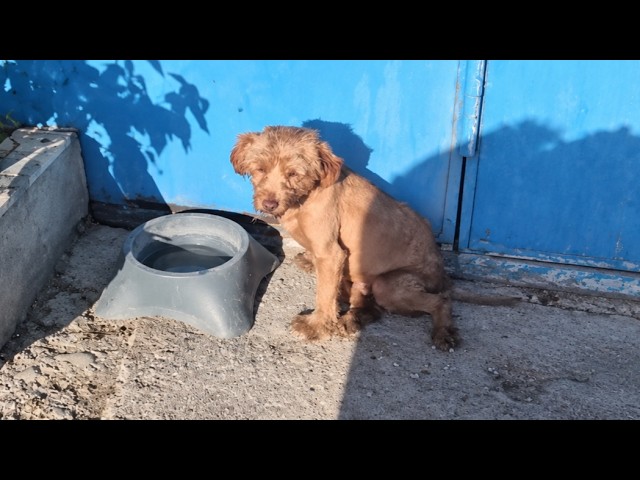
Her name was Hazelnut, and life on the streets had left her in terrible condition. The lower half of her body was paralyzed. With no strength in either hind leg, she had to drag herself wherever she needed to go. Even the simplest journey demanded an effort a healthy dog would never know.
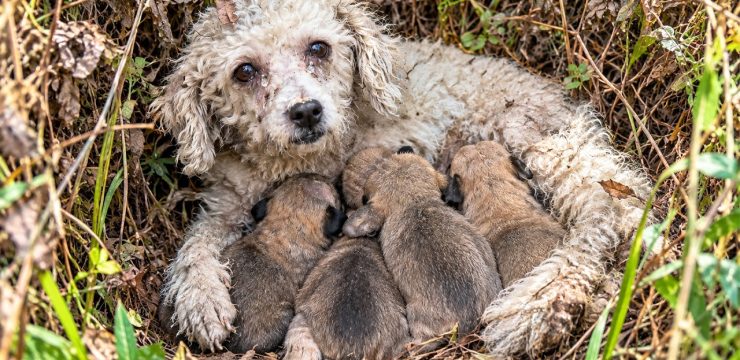
The ground had taken its toll. Repeated contact with the rough surface had left sores across her skin. Each attempt to move exposed her already injured body to more friction. But hunger did not disappear because movement hurt. Hazelnut still had to find food, and her front legs were the only means she had of reaching it.
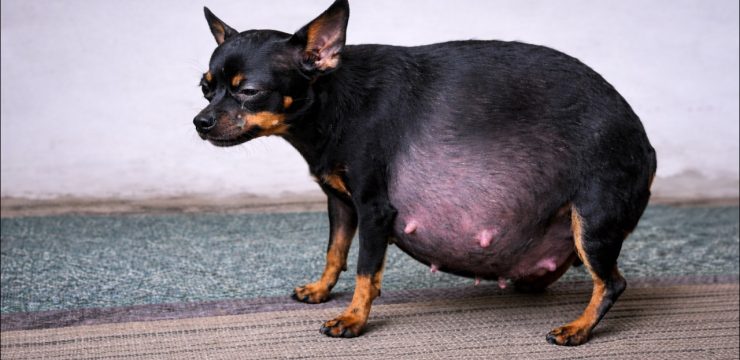
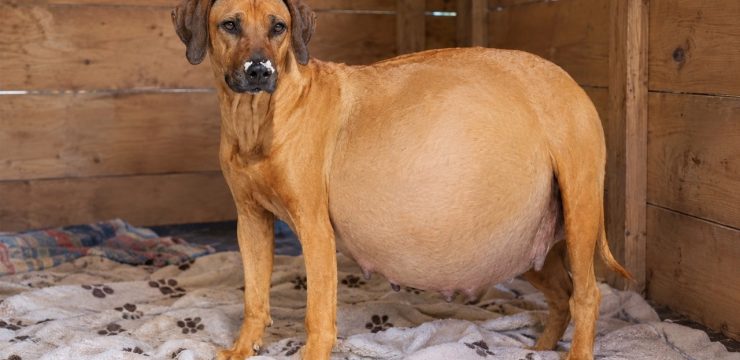
The rescuers who discovered her saw an animal in urgent need of help. Her struggle was obvious, but another sorrow remained hidden. Hazelnut was pregnant. Beneath the injuries and exhaustion was a mother whose story was about to become even more painful.
Veterinarians examined her and performed an ultrasound to assess her condition. What they found brought devastating news. Hazelnut had already suffered a miscarriage. The puppies she had been carrying were no longer alive.
It was a profound loss, made harder by the thought of everything she had endured while searching for food. She had continued to pull herself through the streets, her injured body working as hard as it could, while the lives developing inside her had already been lost. No one could explain that loss to her in words she would understand. Those caring for her could only recognize the sadness of what had happened and make sure she no longer faced her suffering alone.
There was also the question of her back legs. Why could she not stand? Could treatment give her the chance to walk again? The veterinary examination revealed severe fractures that were not new. The damage had existed for a long time, leaving her with a condition far beyond an ordinary injury.
Even with such serious findings, the possibility of restoring movement had not yet been completely abandoned. Hazelnut underwent surgery in the hope that something might still be done for her ability to walk. For everyone hoping to see her stand on four legs, it was an important attempt, although the chances were uncertain.
The result was not the one they had wished for. Her injuries were too severe and could not be reversed. Hazelnut would remain permanently paralyzed in both hind legs.
That diagnosis changed what recovery could mean. Healing would not be measured by seeing her rise and walk normally. There would be no promise that her back legs would someday grow strong again. The task now was to care for the body she had, protect her from further harm, and help her experience a life that was not defined entirely by what she had lost.
There was so much to care for. Her skin needed attention after the constant scraping against the ground. Her body had been through an overwhelming ordeal. And the loss of her puppies was a sorrow that could not be undone by medicine or surgery. None of those facts vanished simply because she had finally been brought somewhere safe.
But they were not the whole of Hazelnut’s story.
Despite all she had endured, she remained a sweet, friendly dog with a lively spirit. Her disability had not taken away her capacity for happiness. The rescuers could see that she still wanted to move, explore, and enjoy the world around her. She needed a way to do those things without forcing her injured body to scrape along the ground.
So they bought her a special wheelchair designed for dogs. It was a practical gift, but its meaning reached far beyond the equipment itself. The wheelchair supported her where her hind legs could not, allowing her to move using the strength she still possessed. For a dog who had been dragging herself in search of food, that difference was enormous.
Hazelnut could run again. She could explore the places around her and enjoy the freedom of moving without relying on her injured back legs. Her wheelchair did not erase the damage to her body. It did not change the veterinary diagnosis. What it changed was how much of life she could reach.
There is a particular tenderness in seeing an animal find joy after so much hardship, especially when the hardship cannot be completely repaired. Hazelnut did not need to be physically perfect to deserve comfort or to have a future worth celebrating. She needed people willing to see her as more than her injuries and to give her the support that made everyday happiness possible.
Her rescuers continued to tend to her wounds and care for her needs. Just as importantly, they gave her the safety and affection that had been missing from her days on the street. She no longer had to drag herself across the road to search for her next meal. She no longer had to face hunger and loneliness without anyone looking after her.
Now Hazelnut has a safe, loving home and the chance to play with a freedom she once lacked. Her back legs remain paralyzed, and the puppies she lost cannot be brought back. The pain in her story is real, and a happy ending does not pretend otherwise.
Yet she is here, cared for and full of life. The dog who once struggled forward on two legs can now move through her world with the help of a wheelchair and people devoted to her well-being. Hazelnut’s second chance was not about becoming the dog she had been before her injuries. It was about being loved and protected exactly as she is.