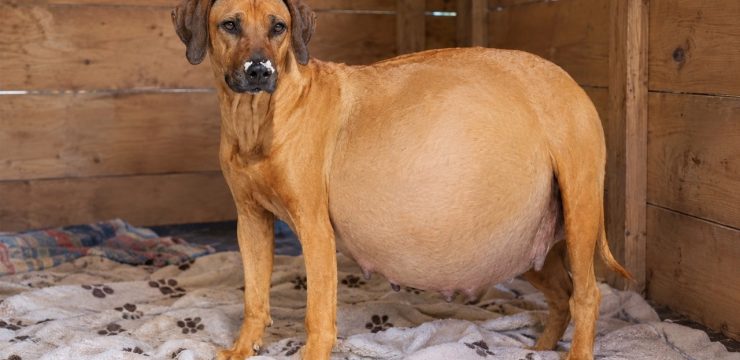
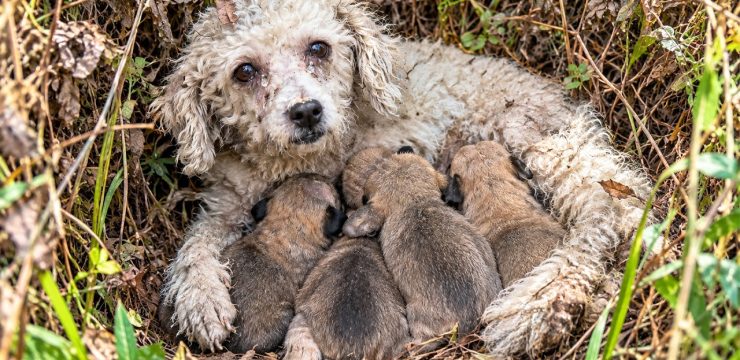
The tiny mother kept trying to give birth, but her puppies would not come. Every painful contraction brought another cry, and the people caring for her could see that determination alone would not be enough to carry her through.
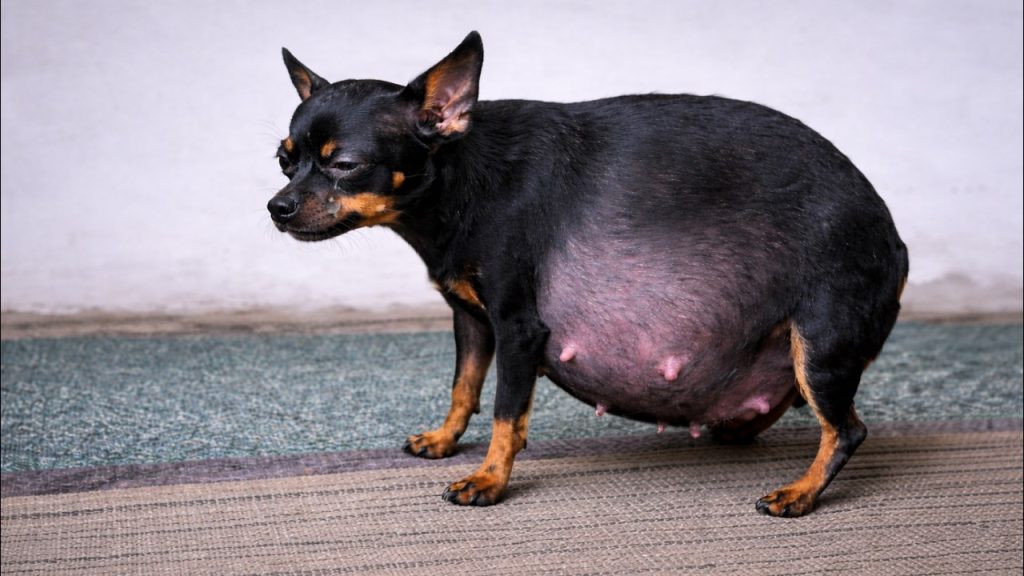
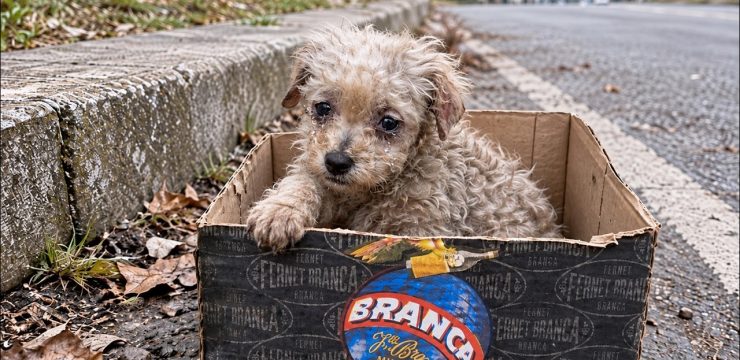
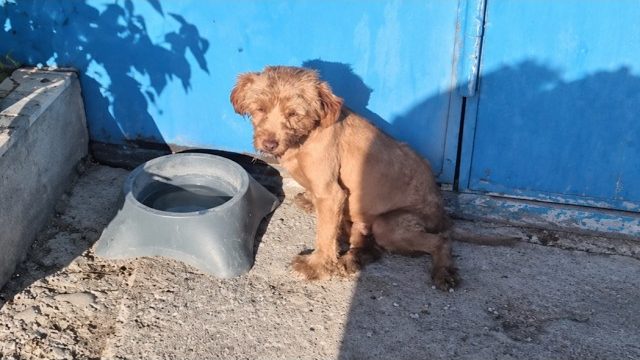
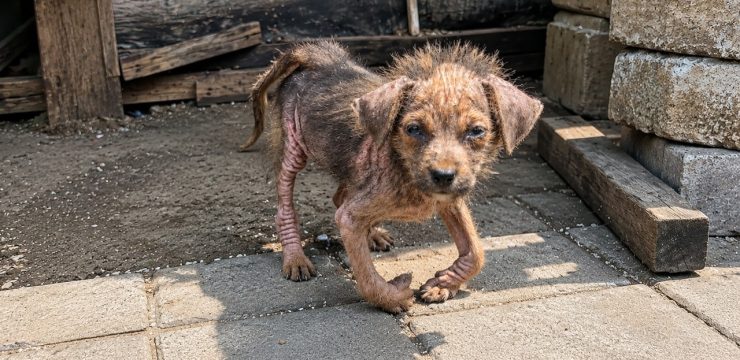
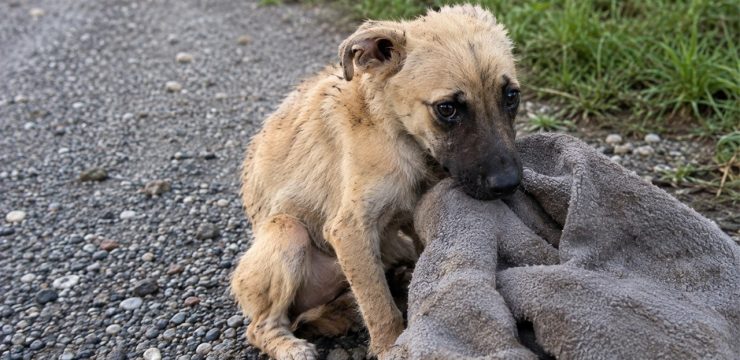
Before she faced this frightening ordeal, Isdra had already endured abandonment. She was a pregnant dog, alone on the streets, without the security an expectant mother should have. When rescuers found her, she was weak and deeply frightened. Her small body needed care, and the lives developing inside her depended on it, too.
The rescuers brought Isdra into their care and committed themselves to protecting her through her pregnancy. Instead of leaving her to face her circumstances alone, they gave her a chance to approach motherhood with people ready to help. What had begun as a rescue from the streets soon became a struggle to protect an entire little family.
Isdra was a Pinscher, a dog with a small, delicate frame. Her pregnancy was especially difficult because the puppies’ father was a much larger dog. That difference in size would become terribly important when the moment of delivery arrived. Until then, the rescuers could offer safety and attention, but they could not know how difficult the birth would be.
When labor began, Isdra’s distress was impossible to overlook. She cried out during contractions and struggled to deliver her puppies. Her body was already weak, and every unsuccessful effort added to the concern surrounding her. The people watching over her could offer comfort and support, yet they could not make the delivery happen. She continued trying, but no puppy was born.
An entire day of labor passed without success. For a dog as small and exhausted as Isdra, the situation had become dangerous. The puppies could not remain trapped indefinitely, and their mother needed medical intervention. What should have been the beginning of a new chapter for her family had turned into a medical emergency threatening all of their lives.
Her rescuers took her to a veterinary clinic, where the team moved to perform an emergency cesarean section. The operation was necessary to bring her puppies into the world when she could not deliver them naturally. The veterinarians also performed hernia surgery and spayed Isdra. These procedures meant her own body required careful attention at the same time her newborns needed help.
Two puppies were delivered. One was breathing normally and appeared strong. The other had spent hours stuck in the birth canal and arrived in an extremely fragile condition. Although both puppies had made it through the delivery, their first moments could hardly have been more different. One seemed ready for life outside the womb. The other needed extraordinary care simply to have a chance.
For the rescuers and medical team, the surgery was not the end of the crisis. It had brought Isdra’s puppies into the world, but the family remained vulnerable. Their mother had endured a difficult labor and major medical procedures. Her weakest puppy had already faced a dangerous beginning. The next challenge was helping them survive the period that followed.
When Isdra awoke from anesthesia, she was confused. She did not immediately seem to recognize the two newborns as her own, and at first she rejected them. It was another painful complication in a journey that had already demanded so much of her. Yet the rejection came as she was recovering from surgery, and the people around her continued to care for both mother and puppies.
Because the newborns could not simply rely on their mother to feed them, nurses and rescuers stepped in. They helped the puppies nurse every hour, keeping especially close watch over the one who had been trapped during delivery. These repeated efforts may have looked small beside an emergency operation, but for a vulnerable newborn, regular feeding and attentive care were essential.
The weaker puppy was named Clea. Her condition made her progress particularly meaningful. She had entered the world after hours of difficulty, when even breathing and growing stronger could not be taken for granted. The people helping her could not erase what had happened during her birth. They could, however, keep meeting her needs, one careful feeding and one small improvement at a time.
Gradually, Clea began to recover. The once fragile puppy grew stronger and developed more noticeably. Her increasing energy brought a welcome change to a story that had begun with abandonment, fear, and an exhausting delivery. She even started showing a playful, lively side. For those who had worked to keep her alive, that growing spark of mischief was a precious sign of progress.
Her sibling, who had been healthy and breathing normally at birth, had also been given the chance to begin life with dedicated care nearby. The difference between the puppies’ beginnings remained part of their story, but Clea’s improvement showed how much could change when a fragile little animal received the attention it needed.
Isdra’s own recovery was more uncertain. Despite everything that had been done for her, she remained very weak and needed to stay at the veterinary hospital for further treatment. Her babies’ progress did not mean the danger and exhaustion she had experienced had simply disappeared. The little mother still needed time, medical care, and the same patience that had carried her family through the crisis.
There was no need to pretend that every difficulty had been resolved. Isdra was still healing, and her puppies were only beginning their lives. But two newborns had survived a frightening birth, and Clea, once the weakest of them, was growing into an energetic puppy.
Their story is a reminder that rescue is not always one dramatic moment. Sometimes it is a frightened mother brought in from the street, a lifesaving operation, and countless acts of careful attention afterward. For Isdra and her puppies, compassion opened the door to hope. Steady care helped keep that door open for a mother and her babies.