Being passed over meant more waiting and no promise that life would improve. Fairy needed more than food and shelter. She needed people willing to care for her when every ordinary movement was a challenge.
Eventually, those people came.
Her rescuers saw the fragile dog behind the injury and refused to turn away. They brought Fairy home, knowing affection alone would not restore her strength. She would need consistent care, patient attention, and help with things that healthy dogs do without thinking.
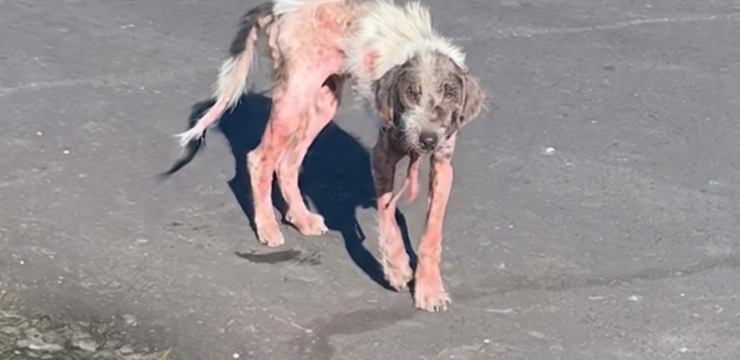
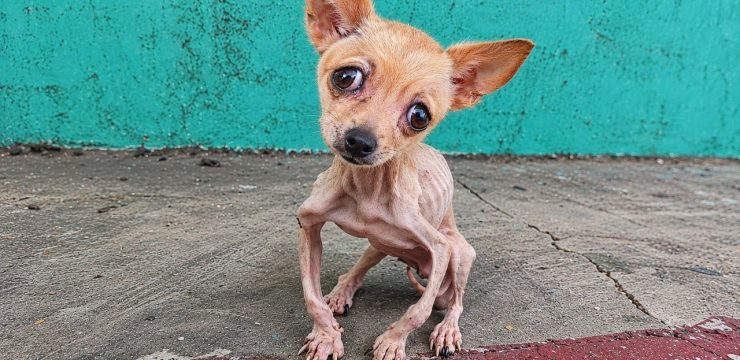
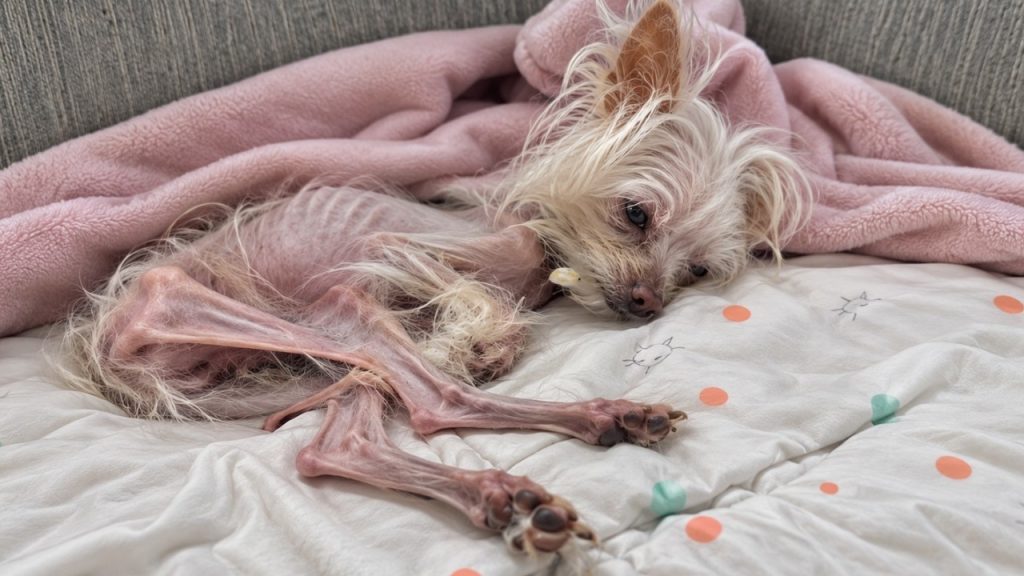
The change in surroundings did not instantly change her condition. Fairy arrived severely malnourished and weak. Simply lifting her head was difficult. Eating, an act most dogs greet with easy enthusiasm, left her exhausted.
But her appetite was still there.
When food was offered, she ate eagerly, a small and encouraging sign in a body that had been deprived for so long. Her caregivers helped her eat by hand, offered gentle words, and adjusted her position so she could rest more comfortably. These modest acts marked the beginning of a different life.
Instead of being overlooked because she needed assistance, she was receiving assistance precisely because she needed it.
Her rescuers could not undo what had happened at the garbage dump. They could not make her injured back heal through kindness alone. What they could do was make sure she no longer faced her struggle without support.
There is a special kind of patience required when caring for an animal who cannot tell you what hurts or how tired she feels. Progress can be hard to see. Fairy’s caregivers met those needs with a gentleness that gradually helped her feel safer around them.
As she received nutritious meals, her body began to fill out. The dog who had been reduced to skin and bones slowly gained weight. With nourishment came the opportunity to work on something even harder: learning to move again.
Her back and legs remained a serious obstacle. Standing was not simply a matter of deciding to get up. Her weakened body had to develop strength, and each effort demanded more energy than she could easily spare.
Her caregivers began daily physical therapy, using small pieces of food to encourage movement. They placed the food around her, inviting her to reach, stretch, and push herself upward. It was a gentle way to give each difficult attempt a purpose she could recognize.
Sometimes the effort was overwhelming. Fairy tired quickly, and she could fall asleep right in the middle of an exercise. Her exhaustion was a reminder of how far she still had to go, even as her willingness to try offered hope.
There was no single easy leap from paralysis to freedom. Every attempt mattered because it asked Fairy to do something that had once been beyond her reach.
She tried to lift herself.
She stretched toward the food.
And even when her body needed rest, she kept trying as she grew stronger.
For her caregivers, these small efforts deserved attention. They continued helping, noticing what Fairy could manage, and giving her the chance to try again. None of that daily care was spectacular, but every effort protected her dignity.
Fresh air and sunshine became part of her days, alongside the regular care and physical exercises that supported her progress. Her body was changing, but something else was changing, too. The terrified dog who had arrived unable to lift her head was slowly learning that people could bring comfort rather than fear.
Trust does not erase an injury. It cannot replace the work of rehabilitation. Yet a dog who feels safe enough to accept help has something precious: room to recover without facing every difficulty alone.
Then came the moment that made those patient efforts visible.
Fairy stood on her own.
There was no need to make her first independent steps sound graceful. They were unsteady. She was learning to balance and move on legs that had struggled to support her. But she was standing, and she was taking steps without anyone holding her up.
For a dog once considered too difficult to adopt, that change carried enormous meaning. She had gone from being unable to stand to discovering what her own strength could do.
Those shaky steps did not remain shaky forever.
As Fairy continued to improve, her movements grew steadier and more confident. She was no longer defined only by the limitations that had made others hesitate to bring her home. Her growing strength allowed her to experience the simple freedom of moving where she wanted to go.
Eventually, the once fragile dog could run.
It is difficult to imagine a greater contrast with the animal first found in the garbage. The same dog who could barely hold up her head now moved with energy and joy. The thin, frightened creature whom nobody at the shelter wanted had become healthy, active, and full of life.
Fairy’s transformation was not a reason to forget how much care her recovery required. Every meal offered by hand, every comfortable resting position, every small exercise, and every patient return to the task helped make that change possible.
Her story also reminds us how easily an animal’s needs can hide the life still waiting to be lived. A disability or a severe injury can make caring for a dog difficult. It does not make that dog less deserving of care.
Fairy did not need someone to see an easy rescue. She needed someone willing to stay beside her through a hard one.
Because they did, a dog who once could not stand can now run freely, safe in the love she should always have known.