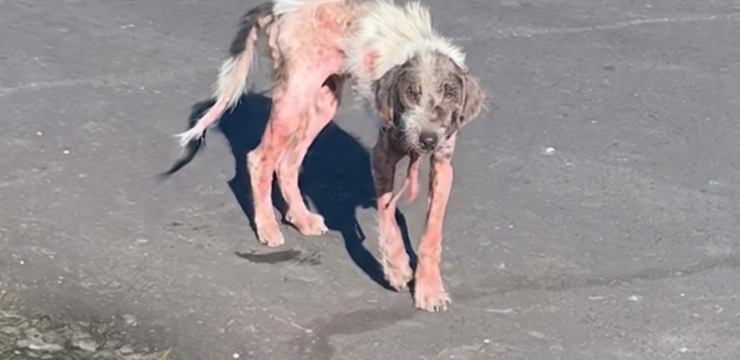
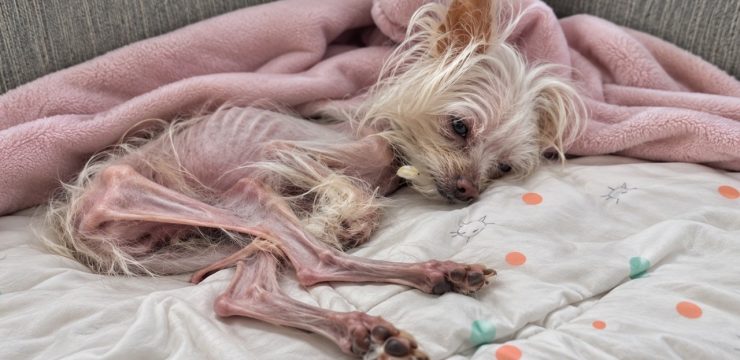
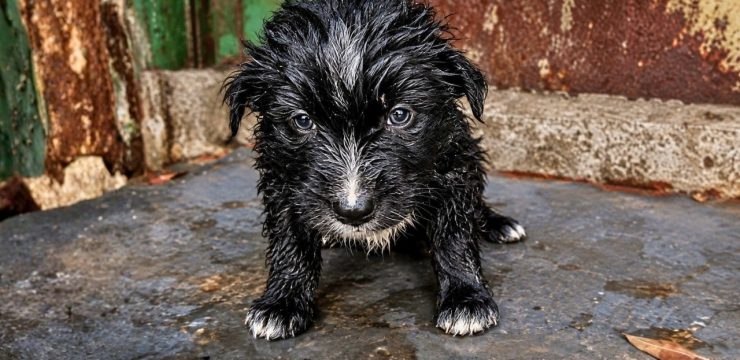
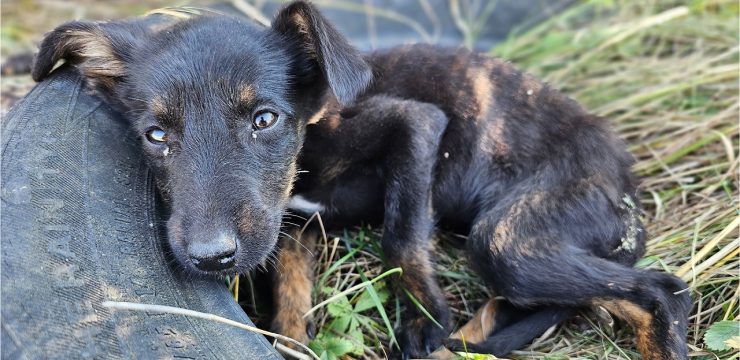
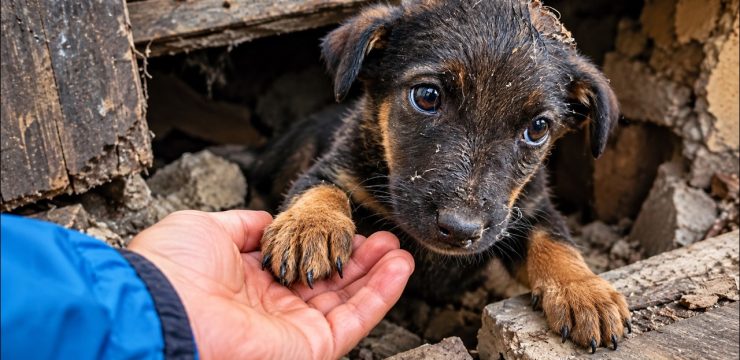
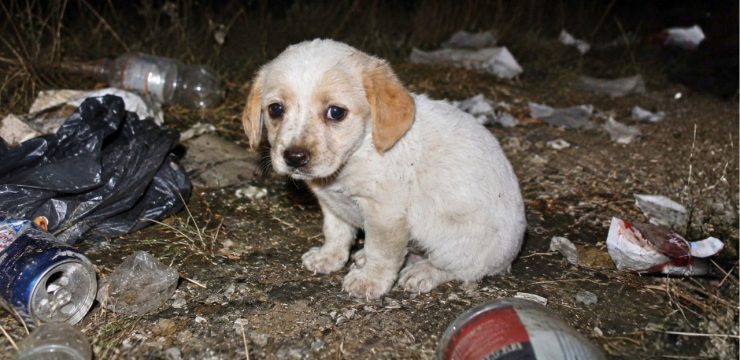
The little Chihuahua could not move. His body was thin, his strength gone, and he had been abandoned among piles of garbage. There was no way to know how much longer Chewie could survive in that condition. By the time he was found, even staying alive seemed to demand more than his fragile body could give.
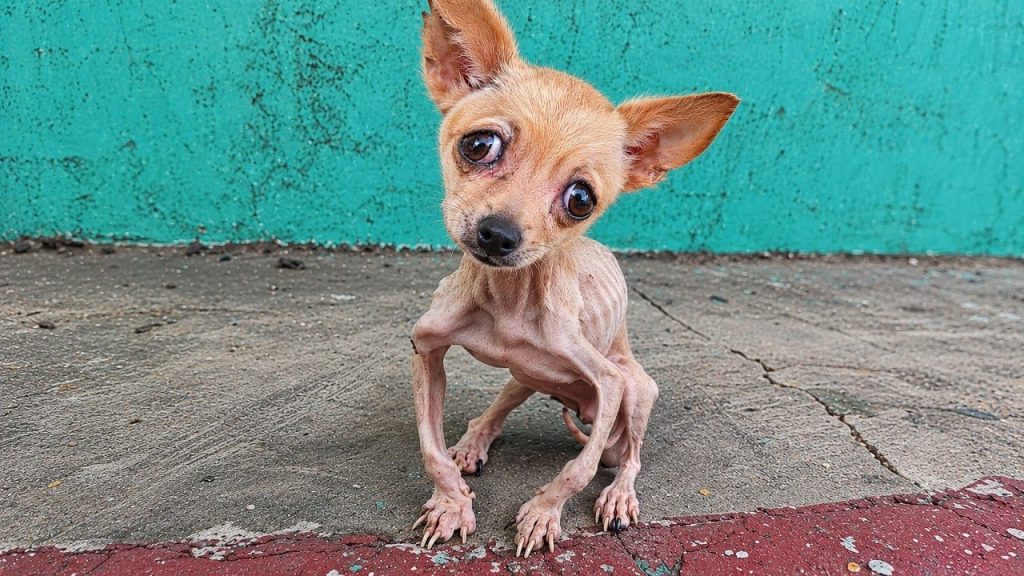
For a dog so small, the world should have held room for ordinary comforts: food, protection, gentle hands, and a place to rest without fear. Instead, Chewie had been left in circumstances no animal should have to endure. Severe malnutrition had drained him, and he was barely clinging to life.
His rescuers faced a frightening sight. Chewie was motionless and deeply weakened, and there was reason to fear he might not survive. Yet those who found him did not turn away because his condition looked hopeless. They gave him emergency attention, searching for any sign that there was still a chance to help.
Then came a response.
It was a small change, but in such a critical moment, it mattered. Chewie was still fighting. The rescuers moved quickly to get him veterinary care, where medical professionals could examine the injuries and illness that compassion alone could not treat.
He was taken to a veterinary clinic associated with Friends of Lucas, an animal rescue organization in Ecuador. There, his condition could be assessed beyond the visible signs of starvation and weakness. What the examinations revealed was far more complicated than a simple need for food and rest.
Diagnostic tests and an MRI uncovered serious injuries. Chewie had a grade four dislocation involving the joint between his skull and the first vertebra of his neck. He also had dislocations affecting several joints across all four legs, along with a dislocated kneecap.
The findings helped explain why movement was such an enormous challenge. This was not merely a tiny dog too tired to stand. His body was struggling with multiple severe physical problems, any one of which would have demanded careful attention. Together, they made his path forward uncertain.
The veterinary team also identified acute malnutrition and profound muscle wasting. Chewie had lost not only the nourishment necessary to sustain his body but also much of the strength he needed to function. His fragile condition carried a serious risk to his life.
There was no simple promise that he would recover fully. No one could erase those findings with a comforting word or a single treatment. Chewie needed medical care guided by the severity of his injuries, along with the patience required when progress could not be rushed.
Still, the rescue team refused to give up on him.
They developed a treatment plan and committed themselves to helping him through the dangerous period ahead. For Chewie, this meant that the place where he had been found would not define the rest of his story. Whatever challenges remained, he now had people working to protect his life.
That commitment came with a heavy financial burden. His first veterinary bill alone exceeded $1,000, a significant expense before the full course of care had even been completed. The rescuers appealed to the community for support, knowing that Chewie’s medical needs were far greater than what a single encouraging moment could solve.
For Chewie, physical therapy and intensive rehabilitation were part of the plan. The hope was that, with appropriate treatment and ongoing support, he might someday regain the ability to walk on his own. It was a hope worth working toward, but not a result anyone could honestly guarantee.
His injured neck, affected limbs, and weakened muscles meant that every decision about his care mattered. Recovery would require more than determination. It would require the expertise of veterinary professionals, continued resources, and time for a body that had endured so much to respond.
The rescuers understood that improvement could not be measured only by whether Chewie took a step. Before any larger goal could become possible, he needed to survive the immediate danger. That was the urgent task, and it made each sign of greater stability meaningful.
Gradually, there was encouraging news.
Chewie made it through the most critical stage. His health began to stabilize, an important change from the moment when he had been found helpless among the garbage. He was not suddenly healed, and his complicated injuries had not disappeared. But the little dog who had once seemed close to losing his life was still here.
That difference mattered enormously. The team had not been able to promise a perfect ending, yet their efforts had given him something precious: a genuine chance to continue receiving care. His future remained uncertain, but it was no longer defined only by abandonment and immediate danger.
There is a particular kind of courage in caring for an animal whose needs are great and whose recovery may be slow. It asks people to recognize the value of a life without demanding quick results in return. Chewie’s rescuers showed that commitment by continuing to stand beside him.
And Chewie, despite his weakness and devastating injuries, had endured long enough to reach a safer point in his journey. His strength was not proof that he needed less help. It was one more reason to make sure that help continued.
He still faced a long and challenging road. The hope that he might walk independently remained a goal for rehabilitation, not an accomplished milestone. What could be celebrated was real: Chewie had survived the most dangerous period, his condition had grown more stable, and he was no longer facing his struggle alone.
Once, he had been left among discarded things, as though his life held no worth. Now that same small life was receiving care, attention, and hope. Chewie’s story reminds us that a second chance does not have to mean every wound is healed. Sometimes it begins with someone deciding that a suffering animal deserves the chance to keep going.