The older woman’s hands began to tremble before she even reached for the keys.
She looked down at them — those weathered, work-worn hands — then shifted her gaze to the folded document lying on the counter, and finally back up to the face of the young woman standing before her. Something in those eyes stopped her cold. Something unbearably familiar.
It couldn’t be.
And yet.
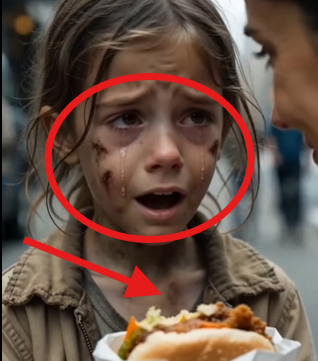
Those eyes. That trembling mouth. That same fragile softness she had witnessed so many years ago in a tiny little girl clutching two coins in her small fist, trying with everything she had not to cry right there in front of a stranger on the street.
“Oh my God,” the vendor whispered, her voice barely making it past her lips.
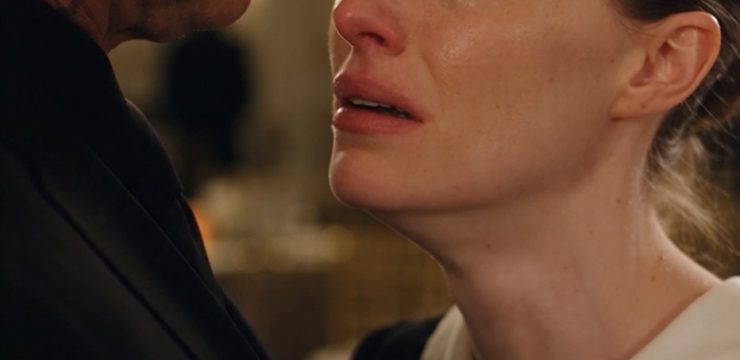
The young woman nodded slowly, tears already slipping down her cheeks before she could stop them.
“It was me,” she said. “I was that little girl.”
For one suspended moment, the entire street seemed to disappear around them. The rumble of traffic, the shuffle of passing footsteps, the ordinary noise of a busy city afternoon — all of it faded away completely, swallowed up by the sheer weight of recognition passing between two human beings who had never forgotten each other.
The older woman pressed one trembling hand over her mouth.
“The little girl with the two coins,” she breathed.
The young woman laughed softly through her tears, the kind of laugh that only comes when the heart is too full for any other sound.
“That was me,” she said again. “I told you I’d come back someday. I meant it.”
The vendor didn’t move right away. She came around the side of her stand slowly, carefully, as though she were afraid that moving too quickly might cause this moment to dissolve like a dream she wasn’t ready to wake up from.
When she finally reached the young woman, they simply stood there facing each other — two people separated by years, by struggle, by the thousand invisible miles life puts between those who meet only once and never quite let go.
The older woman reached up with her rough, work-hardened fingers and gently touched the young woman’s face, the way a person touches something they once thought was lost forever.
“I used to wonder what happened to you,” she whispered. “I used to lie awake some nights and pray that you were all right. That somehow, you made it.”
The young woman placed her own hand over the vendor’s and held it there against her cheek.
“I made it,” she said softly. “And I made it because of you. Because that day, you looked at me like I mattered. You treated me like I was worth something — when I had nothing, and I felt like nothing.”
The older woman shook her head, overwhelmed, her eyes swimming with tears she no longer tried to hold back.
“What is all of this?” she asked, finally looking down at the document and the set of keys resting on the counter between them.
The young woman drew a slow, steadying breath.
“It’s the deed to this stand,” she said clearly. “The permit. Every fee and payment settled in full.”
The vendor stared at her, speechless.
The young woman’s lips trembled even as she smiled.
“You gave me food when all I had was two coins and a heart that was falling apart. You didn’t look me over and decide I wasn’t worth your time. You fed me. You treated me like I deserved to be taken care of.” Her voice broke slightly before she pushed through. “Now I’m here to take care of you.”
“You don’t have to do this,” the older woman said, shaking her head in disbelief, her voice barely holding together.
“Yes,” the young woman said, and there was a quiet certainty in her voice now — the kind that comes not from pride but from purpose. “I do. This isn’t charity. This is a debt I’ve owed for a very long time.”
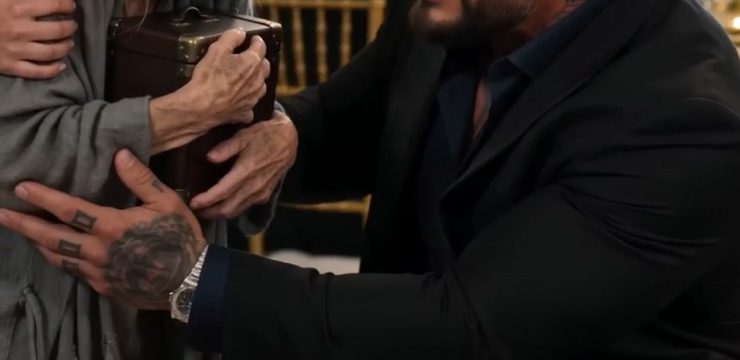
She picked up the keys and pressed them firmly into the vendor’s palm, curling the older woman’s fingers around them with both of her own hands.
“This stand is yours now. Truly yours. No rent hanging over your head. No debt waiting to swallow you. No fear of waking up one morning and losing the only thing you’ve worked your whole life to build.”
A sob broke loose from the older woman — the kind that sounds like relief and grief and gratitude all tangled together into one raw, unguarded sound.
The young woman’s own voice cracked as she added the last part, the part she had thought about saying for years.
“And starting today, no child who comes here hungry leaves without being fed. No matter what they have in their pocket. No matter what.”
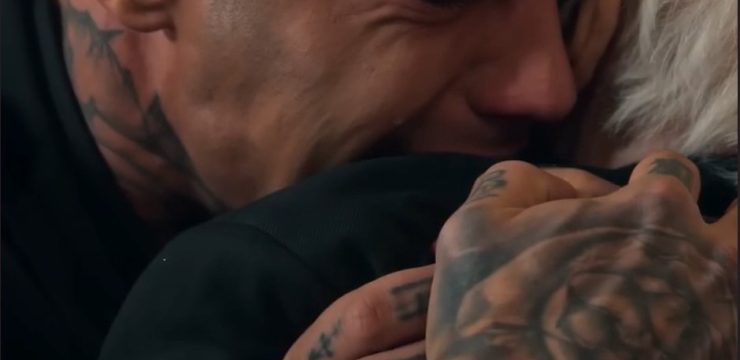
That was the moment the older woman pulled her close — right there on the sidewalk, in front of anyone who happened to be walking by. She held on with the kind of strength that only comes from someone who has spent a lifetime giving and giving without ever expecting anything to return.
People slowed as they passed. Some paused. Some smiled quietly to themselves and kept walking. Neither of the two women noticed or cared.
The older woman cried softly into the young woman’s shoulder.
“You remembered me,” she whispered.
The young woman closed her eyes and tightened her arms around her.
“No,” she whispered back, her voice barely above a breath. “I remembered kindness.”
And kindness, as it turns out, has a very long memory. It doesn’t forget the hands that offered it, or the moment it arrived, or the life it quietly made possible. It waits. It grows. And when the time is right, it finds its way home — carrying everything it was given, and so much more.
Some debts aren’t paid with money. They’re paid with the choice to become the kind of person who makes someone else feel like they matter. And on that sidewalk, on that ordinary afternoon, two women proved that a single act of grace — given freely, without expectation, to a child with two coins and a breaking heart — can echo forward through an entire lifetime.