For one long second, nobody in that room moved.
Not the fiancée standing near the doorway with her arms crossed. Not the son hovering somewhere between guilt and cowardice. Not even the elderly woman who had just been brought to her knees — literally — beside the worn sofa she had dusted and plumped every single morning for decades.
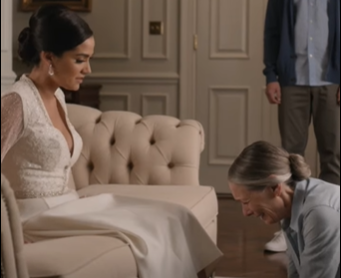
The only sound filling that house was the broken rhythm of one woman trying to breathe through her tears.
Then the front door opened wider, and he walked in.
The military officer stepped into the room wearing the kind of stillness that only comes from a man who has stared down worse things than this. He carried a folder under his arm. His jaw was set. His eyes swept the scene once, and in that single glance, he understood everything that had happened in his absence — and everything that should never have been allowed to happen at all.
He set the folder on the table. Gently. Deliberately.
Then he looked directly at the woman on the floor and said two quiet words:
“Stand her up.”
The son moved before the sentence finished. He crossed the room, bent down with shaking hands, and helped his mother to her feet. Her whole body trembled. She could barely hold her own weight. But she stood — the way she had always stood — because that was simply who she was.
The fiancée recovered quickly. People like her usually do.
“There must be some misunderstanding,” she said, smoothing her voice into something almost reasonable. “We were told this house now belonged to the family.”
The officer looked at her for a long, measured moment.
“She is the family,” he said.
And just like that, the air in the room changed completely.
He opened the folder and drew out the top document. His voice was calm and clear — the kind of voice trained to deliver hard truths without flinching.
He explained that before his deployment, he had taken legal steps that no one in that household knew about. He had transferred the property — every room, every account tied to it, every legal right attached to it — fully and permanently into his sister’s name.
The elderly mother pressed her hand over her mouth.
“You… gave it to me?” she whispered.
For the first time since he walked through that door, his expression softened.
He looked at her the way a person looks at someone they have owed a debt to for years and finally found the words to repay.
“You took care of our parents,” he said quietly. “You raised my children when I couldn’t be here. You kept this home alive with your own two hands for more years than anyone should have asked of you.”
He paused.
“I made sure no one could ever treat you like a guest inside these walls again.”
The son lowered his head. There was no way to dress up what he had allowed to happen. He had stood in that same room while his mother was brought to her knees, and he had done nothing. The shame of that was not something a single apology could fix.
The fiancée looked at him with something close to disbelief.
“You knew nothing about this?”
He shook his head once.
But it didn’t matter anymore, did it.
Because the officer reached back into the folder and pulled out one final page — stamped and signed and absolutely binding.
He read it aloud without rushing a single word.
Any person who humiliates, coerces, or degrades the legal owner inside this residence forfeits all right to remain on the premises — including any future marital or residential claim.
The room went so quiet you could have heard a pin drop on the carpet.
The fiancée took one step back. Then another.
The arrogance that had filled her posture just minutes before drained out of her completely. She suddenly looked very small standing there in a house that, on paper and in every way that mattered, had never belonged to her at all.
The officer closed the folder and spoke directly to her — steady, unhurried, final.
“You made the legal owner of this home kneel at your feet.”
Then he turned to his son.
“And you stood there and watched her do it.”
No one spoke. There were no words adequate to the moment.
He set his bag aside. Squared his shoulders. And delivered the last thing he had come there to say.
Her name remained on every document in that house. Every deed. Every account. Every legal record attached to those four walls and everything inside them.
The son looked like a man who had just watched the floor give way beneath him.
The fiancée had gone completely pale.
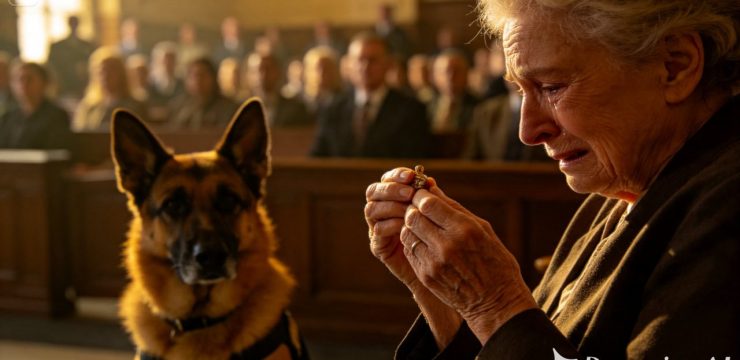
And the elderly mother, still trembling, still holding herself upright by sheer force of will, finally lifted her eyes — red and wet and full of something that had just begun to look like dignity restored — and spoke the one sentence that closed the door on every cruel thing that had been said to her inside that house:
“Then no one humiliates me under my own roof again.”
She said it quietly. She said it without venom or performance. She said it the way a woman says something she has waited a very long time to finally be allowed to mean.
And in that moment, every person standing in that room understood that something had shifted — not just legally, not just on paper — but in the permanent, unspoken record of what this family owed her, and what she would never again be asked to silently absorb.
Justice, when it finally arrives, does not always come loudly.
Sometimes it walks through a front door, sets a folder on a table, and speaks in a calm, steady voice on behalf of someone who has spent a lifetime being too gracious to speak for herself.