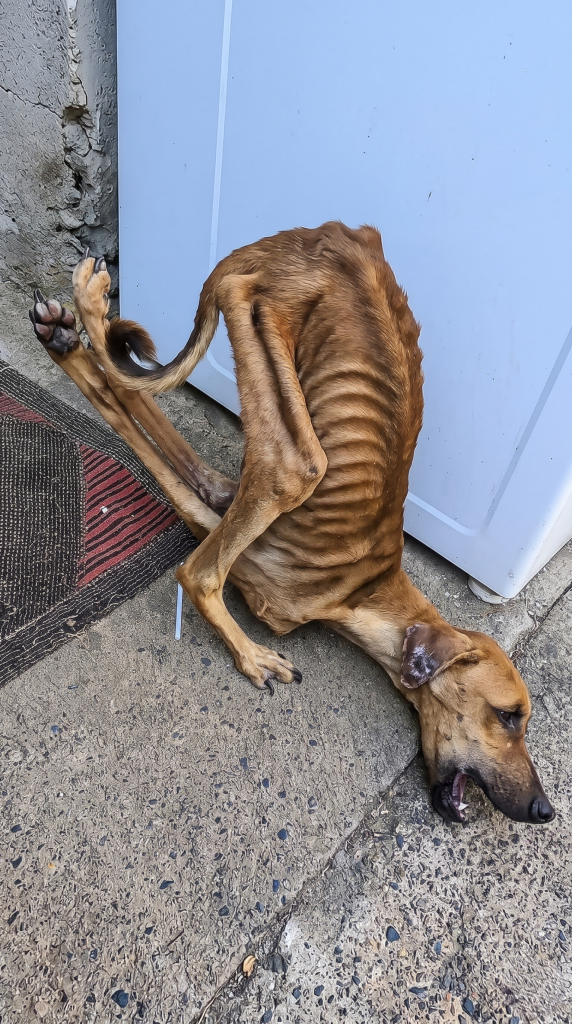
There was nothing wrong with Kangu’s desire to live, to be safe, or to receive affection. But instead of compassion, he encountered rejection. People met his unusual appearance with disgust or contempt, leaving a vulnerable dog to face hunger and loneliness without the comfort of someone looking after him.
For any dog, life on the streets can be difficult. For Kangu, moving with his front legs so badly affected made an already painful existence even harder. He had been abandoned to a life of deprivation when what he needed most was help.
Kangu had not chosen the shape of his legs. He could not change the way strangers saw him. He could only continue living with the body he had, even as the world seemed unwilling to see the gentle life within it.
Then Thaislane found him.
That simple encounter became the turning point in Kangu’s story. Where others had seen a dog they did not want to approach, Thaislane saw someone who needed care. She rescued him and brought him to a veterinary clinic, where his wounds were bandaged and he received medical attention.
The treatment mattered. What followed mattered, too.
Kangu was no longer facing everything alone. Thaislane gave him the affection and attention that had been missing from his life. She held him close and embraced him with a tenderness that stood in striking contrast to the rejection he had known. A dog once treated as unwanted was finally being cherished.
No one can say precisely what Kangu understood in those moments. But the change in his circumstances was unmistakable. Instead of hunger and harsh judgment, there was someone willing to care for him. Instead of being left to struggle without help, he had a person who treated his well-being as something important.
Recovery was not simply a matter of receiving affection. His weakened body needed nourishment and consistent care, too. Thaislane made sure Kangu had nutritious meals and the attention necessary for him to regain strength. Gradually, his physical condition improved.
For an animal who has endured neglect, the chance to eat well, receive proper medical care, and be treated gently can change the shape of everyday life. Kangu was beginning to experience what care was supposed to feel like.
As his strength returned, so did his visible joy. The little dog who had known such hardship began to seem happy again. His front legs were still part of his story, but they no longer defined every moment of it. Love could not erase the way he had been born, and it did not need to.
Thaislane regarded Kangu as her little son. That feeling showed in the time she devoted to him and the way she made room for happiness in his life. She took him on outings, bought him beautiful clothes, treated him to ice cream, and spent much of her time by his side.
For Kangu, they represented a life in which his needs and enjoyment mattered. He was not simply being kept alive. He was being included, celebrated, and cared for as an individual. His unusual legs did not exclude him from the ordinary pleasures that make a dog’s days brighter.
Still, one challenge remained. However much healthier and happier Kangu became, walking on his severely deformed front legs was difficult. Affection had given him comfort, and good care had helped him recover, but his body still needed a practical way to move more easily.
Then came the gift that opened a new chapter: Kangu’s first wheelchair.
A wheelchair might look like a simple piece of equipment to someone passing by. For Kangu, it meant an opportunity he had never had before. With that support, the dog who had struggled to get around could finally run smoothly and enjoy moving with a freedom that once seemed beyond his reach.
Imagine the difference between spending your life fighting to take each step and suddenly having a way to move with ease. Kangu’s first experience of running was not about becoming like every other dog. It was about having access to a joy that every dog deserves, in a way that worked for his own body.
The wheelchair did not change who Kangu was. It helped the world become more accessible to him. His progress was a reminder that a disability does not diminish a life, and that the right support can make room for experiences once closed off.
What makes his journey so moving is the combination of small kindnesses and one extraordinary opportunity. Medical treatment helped address his immediate needs. Nutritious meals helped rebuild his strength. Thaislane’s tenderness offered him the care he had been denied. And a wheelchair gave him a new way to play.
None of those gifts required Kangu to be different from the dog he was born to be. He did not need to earn love by walking normally or by looking a certain way. He needed someone willing to recognize his worth and respond to his needs.
The happiest part of his recovery was not that his legs became ordinary. They did not. It was that his days now held belonging, comfort, movement, and moments of simple, deeply deserved delight.
Kangu’s story began in rejection, hunger, and isolation. It grew into one of companionship, healing, and freedom. The little dog who had once been dismissed because of his front legs found someone who treasured him, and eventually he found a way to run.
Sometimes a second chance does not mean changing the life in front of us. It means finally giving that life the care, dignity, and opportunity it deserved all along.