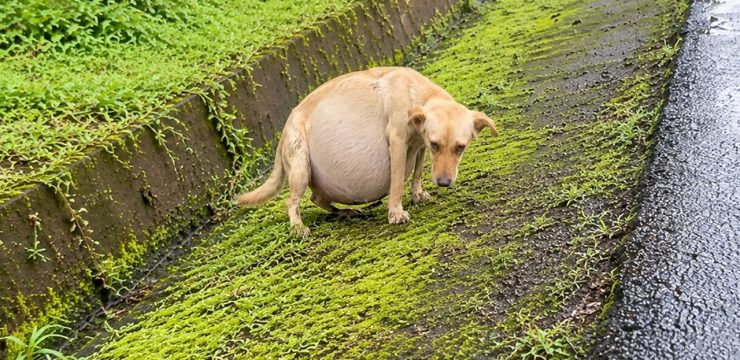
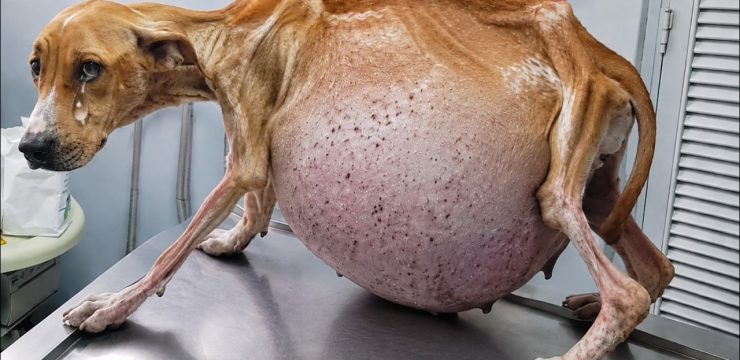
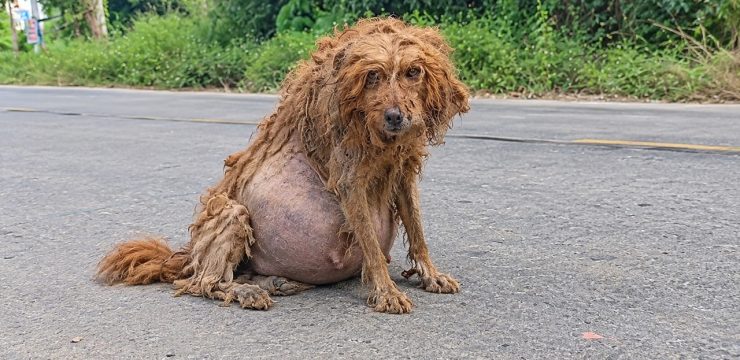
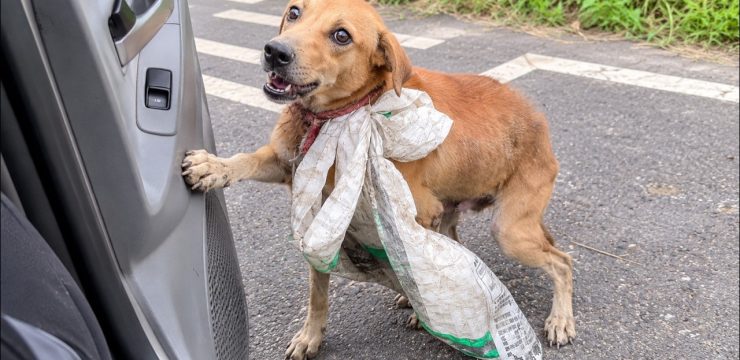
When rescuers found the dog, her swollen belly was impossible to overlook. She was weak, painfully thin, and covered with ants and parasites. A wound marked her tail. Hidden in a dense forest, she needed more than a way out. She needed someone willing to stay beside her through a long and uncertain recovery.
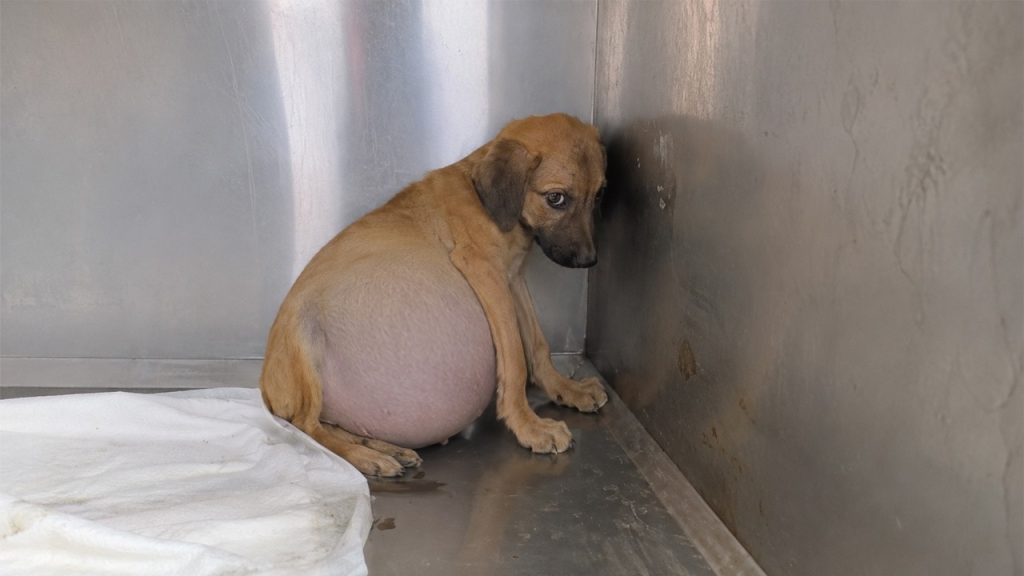
The rescue team had received a report about her and spent the entire day searching. Dense vegetation made finding her difficult. Yet they kept looking until they finally reached the abandoned puppy. What they discovered was troubling. Her frail body suggested illness, while her enlarged abdomen made the urgency plain.
No one knew everything she had endured. What mattered now was that she had been found. Her rescuers could bring her to people equipped to understand what was happening inside her small body and give her a chance to recover.
At the veterinary clinic, the examination revealed the gravity of her condition. She was suffering from heart failure, and a large amount of fluid had collected in her abdomen. Veterinarians drained an entire liter. For a dog so weak, that showed how much her body had been carrying.
The treatment helped her survive the immediate danger, but it did not mean the illness was gone. Her heart condition would require medication and medical monitoring for the rest of her life. Her rescuers had saved her, but caring for her meant accepting an ongoing responsibility. A second chance was possible, though her health would always need attention.
As the days passed, the wound on her tail healed. The change was encouraging, but another kind of pain proved much harder to address. The puppy remained deeply frightened of people. When someone tried to touch her, she sometimes cried and pulled away. Her body stiffened, and her eyes carried a fearful expression that was difficult to forget.
The rescue team visited her every day, hoping their steady presence would slowly become familiar. They could not simply tell her that she was safe and expect her to believe it. Trust was something she would have to learn through experience, without being rushed or forced into closeness before she was ready.
Her physical condition continued to improve. The swelling in her abdomen diminished, and the progress of her medical treatment was visible. Yet she still avoided eye contact and struggled to accept the people who wanted to help her. It was a painful contrast: the part of her suffering that doctors could treat was improving, while fear continued to shape her every encounter.
For anyone who has cared for a frightened animal, recovery calls for patience. Offering shelter and medical care is essential, but those gifts do not erase fear overnight. A frightened dog may need repeated moments of safety before ordinary kindness begins to feel ordinary. Her rescuers understood that their work was not finished when her medical condition stabilized.
Eventually, she was well enough to leave the clinic. She moved into a warm, welcoming shared home, surrounded by the possibility of companionship. But a change of setting did not instantly change her feelings. She remained cautious in the unfamiliar environment, ate hesitantly, and kept her distance from the other dogs. Even in safety, she was still learning what safety meant.
No one demanded that she become affectionate or playful on a schedule. Instead, her caregivers continued offering gentle attention and took her on regular walks to help build confidence. Each outing was part of a larger effort to make the world feel less threatening. Progress did not depend on one dramatic breakthrough. It came through consistency, care, and the willingness to let a small dog find her own pace.
They also gave her a little crate to use as a private place of comfort. She loved it. Within a home that was still new to her, she now had a space that belonged to her, somewhere she could retreat without having to face everything at once. For a dog who had once been found alone and unwell in the forest, that simple place of security mattered.
Slowly, the changes became easier to see. The wary expression that had defined her early days began to soften. Her eyes grew brighter, and the fear that had kept her apart from people was no longer the whole story. The caregivers who had stayed close through her hardest moments were finally seeing signs of a dog ready to enjoy the life around her.
Then came something even more meaningful than a comfortable place to rest: she began to play. The little dog who had once recoiled from touch started connecting with the other dogs in the home. Instead of keeping to herself, she joined in the companionship around her. Her new surroundings were no longer merely a place where she received care. They had become a place where she could experience joy.
Her rescuers named her Lucky. It was a simple name, but it held the meaning of everything that had changed. She had been found after an exhausting search, received urgent treatment for a serious heart condition, and been given the time she needed to feel secure again. Her journey had required medical skill, daily devotion, and an unusual amount of patience.
Lucky’s heart would still need lifelong treatment and monitoring. That reality remained part of her future, even as her spirit seemed lighter. But her story was never about pretending that every problem had disappeared. It was about what became possible when people recognized that healing is more than surviving an emergency.
Once she was a frightened little dog alone in a forest. Now she had care, companionship, a safe place of her own, and the freedom to play. Her life had changed because people refused to give up on her, even when trust came slowly. Lucky had not simply been rescued. She had been given the chance to feel at home in the world again.