“We’re sleeping in tomorrow. You’ll handle the kids.”
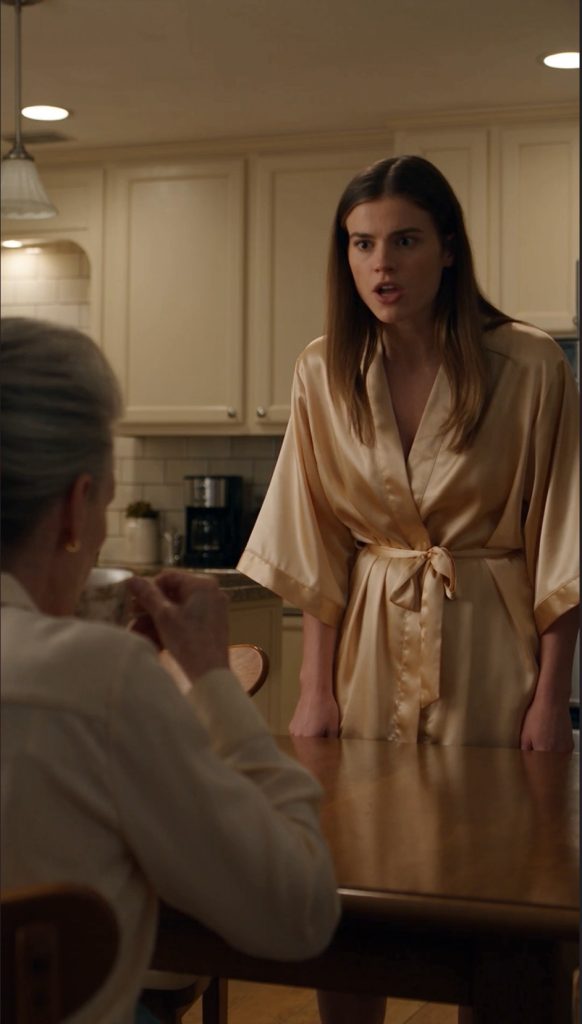
The words came through the guest-room door in a low, casual voice—as if my life had already been rearranged without anyone bothering to tell me. By the next evening, my son’s gas card would be declined, and both of them would begin to understand just how much of their comfortable life had quietly depended on me.
At sixty-eight, peace was the one luxury I valued most.
My brick house outside Charleston sat beneath old live oaks, framed by white columns, blooming hydrangeas, and a brass door knocker I still polished every month. Most mornings belonged to coffee, a novel, fresh herbs from the garden, and birdsong before the neighborhood stirred.
After decades of work, raising my son, losing my husband, and surviving more family tension than I cared to remember, I believed I had earned that quiet.
Then, on a Tuesday evening, a large SUV pulled into my driveway.
It was packed with luggage, boxes, backpacks, baskets—far too much for an overnight emergency.
Julian climbed out first. He looked exhausted, but not surprised. More like a man who had spent the entire drive rehearsing what he was about to say.
“Mom, we only need a couple of weeks. The closing got delayed. The rental fell through.”
Before I could answer, Brooke walked straight past me.
“Julian, bring the kitchen boxes in first. The kids are exhausted.”
No hello.
No question.
No permission.
That was when I understood. They had not come to ask whether they could stay. They had arrived because, somewhere along the way, they had already decided I would say yes.
Seven-year-old Lily stood clutching her worn stuffed rabbit. Little Mason held his plastic dinosaur against his chest.
None of this was their fault.
I bent down, kissed them both, and told them they were safe.
From the hallway, Brooke called, “What’s the Wi-Fi password?”
I looked at Julian.
He looked away.
“I know it’s sudden, Mom. We didn’t have anywhere else tonight.”
Tonight.
He meant it to sound desperate. Instead, it told me everything.
If they had called before showing up, they might have heard no.
Brooke draped her designer coat across my late husband’s antique mahogany desk.
“We’re starving. Did you buy groceries?”
Julian gave me that familiar helpless shrug.
You know how she is.
Unfortunately, I was beginning to.
Within an hour, boxes crowded my hallway. Shoes clogged the entrance. A tablet appeared on my kitchen counter. Someone’s jacket swallowed my favorite reading chair.
Brooke moved from room to room, studying my curtains, furniture, photographs, and decorations with the quiet concentration of someone already imagining what she would change.
That evening, I made one cup of tea.
For myself.
No dinner. No welcome meal.
Brooke opened the refrigerator and frowned.
“There isn’t much ready-to-eat food.”
“I cook for one.”
She gave me a thin smile. “Well, now that the kids are here, we’ll need more practical groceries.”
“We?”
She ignored me and cut herself a generous slice of imported brie I had been saving for Christmas.
Oddly, that was the moment my hurt disappeared.
Something colder replaced it.
Clarity.
They had not come only because they needed shelter. They wanted a babysitter. A cook. A housekeeper. Someone who would help pay for things.
Someone who never said no.
Late that night, I passed the guest room.
Brooke’s voice drifted through the door.
“We can sleep in tomorrow. Your mom will take care of the kids.”
I stopped walking.
Julian answered too quietly for me to make out the words.
Then Brooke laughed.
I went into my bedroom and locked the door.
For the first time in my life.
The deadbolt clicked.
The next morning, I sat alone with Earl Grey tea, buttered toast, and a boiled egg.
One place setting.
At nine, Brooke came downstairs in silk pajamas.
“Where’s breakfast for the kids?”
I glanced toward the kitchen. “The pantry is over there.”
She stared at me.
Then she tried again.
“We need someone to pick them up from daycare. Julian and I are going downtown. We deserve some time to relax.”
I folded my newspaper carefully.
“The grocery store is ten minutes away.”
I lifted my tea and took another sip.
“And my schedule is already full.”
Color slowly climbed into Brooke’s face.
For the first time since she had walked through my front door, she realized I was not going to become the servant she had already assigned me to be.
What she didn’t know was that breakfast and babysitting were only the beginning of what I was about to stop providing.
Nobody in that house was prepared for what happened next. 👇
The first crack came before noon.
Julian walked into the kitchen holding his phone, keys dangling from one finger. “Mom, did you change something on the gas account?”
I kept trimming rosemary over the sink.
“No.”
His shoulders loosened for half a second.
“I closed it.”
Brooke appeared behind him. “You did what?”
“That card was opened by your father when Julian started driving. I kept paying it after he died. I should have stopped years ago.”
Julian stared at the floor.
Brooke did not.
“We have children,” she said.
“So do millions of adults who buy their own gasoline.”
I told them they could stay through Sunday while they arranged somewhere else to live. The children were welcome at my table, in my garden, in my arms.
But I would not be assigned childcare. I would not cook on command. I would not clean up after two capable adults. And I would not finance a household that had moved into mine without asking.
Brooke folded her arms. “You’re humiliating us.”
“No. I’m stopping.”
That word unsettled Julian.
For years, I had covered the gas card. I had kept his family on my roadside-assistance plan. Twice, when daycare costs jumped, I sent money without asking for it back.
Each favor had been small enough to excuse.
Together, they formed a life raft nobody had noticed I was still holding.
Julian sank into a chair. “Why didn’t you ever tell me it was too much?”
I looked at him.
“Why did I have to?”
He flinched.
For the rest of the day, the house moved around an invisible fracture.
Julian made sandwiches for the children. Brooke stayed upstairs. Lily colored at the kitchen table while Mason drove his dinosaur along the windowsill.
At dusk, Julian left to fill the SUV.
Twenty minutes later, the front door opened hard.
He came in pale.
“The card declined.”
“I told you I closed it.”
“I didn’t know the whole account was yours.”
Brooke’s expression changed.
Just slightly.
Julian saw it.
“You knew?”
She looked toward the hallway.
“Brooke.”
“It wasn’t a big deal.”
His voice dropped. “You knew Mom was paying it?”
“I handle the bills, Julian.”
Before he could answer, his phone rang.
He glanced at the screen and went still.
“It’s the lender.”
Brooke reached for his wrist. “Don’t answer that right now.”
That was the moment the room changed.
Julian looked at her hand, then answered.
He barely spoke for the first minute.
“Yes.”
A pause.
“No, I didn’t authorize that.”
Another pause.
His eyes lifted slowly toward Brooke.
“How much?”
When the call ended, he stood with the phone against his ear long after the line had gone dead.
“Twenty-four thousand dollars,” he said.
Brooke said nothing.
“Furniture financing. Two new credit cards. The SUV refinance.”
Her chin lifted. “We needed those things.”
“We lost the mortgage because of those things.”
“The closing was delayed.”
“No.” His voice cracked. “It was denied.”
Lily’s crayon stopped moving.
I crossed the room and touched her shoulder.
“Take Mason out to the porch for me, sweetheart.”
She looked frightened. “Are we in trouble?”
I crouched beside her.
“No. Grown-ups are fixing a grown-up problem.”
She took Mason’s hand, and the screen door whispered shut behind them.
Julian waited until their footsteps faded.
“What happened to the rental?”
Brooke’s eyes flicked toward me.
“Brooke.”
She threw up both hands. “I canceled it.”
Julian did not move.
“Why?”
“Because it was three thousand dollars up front, and your mother has four bedrooms.”
The words landed almost silently.
Julian stared at her as if he were seeing a stranger wear his wife’s face.
“You told me they gave it to someone else.”
“I was trying to save us money.”
“You lied to me.”
“I made a practical decision.”
“You moved our children into my mother’s house without her permission because you decided her home was free.”
Brooke’s composure cracked.
“Oh, please. She has more than enough. Look at this place. She lives alone in a four-bedroom house and acts like making breakfast is some kind of sacrifice.”
Something inside me went completely still.
An ending.
I stood.
“Brooke, you need to leave my house tonight.”
Her eyes widened. “You can’t throw me out.”
“I am asking you to leave.”
She turned to Julian, waiting for the old reflex—for him to smooth everything over.
He looked at her for a long time.
Then he walked toward the stairs.
“I’ll help you pack.”
Brooke laughed, but there was fear inside it now.
“You’re choosing her?”
Julian stopped on the second step.
“No. I’m choosing not to lie anymore.”
For the first time, Brooke had nothing ready to say.
Upstairs, drawers slammed. Suitcase wheels struck the hallway wall.
Julian carried her bags to the SUV.
She left without saying goodbye to the children.
That was the detail that broke him.
He stood in the driveway after the taillights disappeared, hands hanging at his sides beneath the moving live oaks.
I did not tell him everything would be all right.
I simply stood beside him.
After a while, he said, “I let her make you small in your own house.”
“Yes.”
He nodded once. “I’m sorry.”
It was not enough to repair everything.
But it was the first true thing he had given me in a long time.
The weeks that followed were not graceful.
Julian stayed in the guest room while he found an apartment. He cooked badly, washed dishes without being asked, packed lunches, handled daycare, and learned the exact price of gasoline.
He also met with the lender, a financial counselor, and an attorney.
The debts Brooke had opened were real, and so were the consequences. The house purchase was gone. The marriage did not survive the financial disclosures that followed. By spring, their separation agreement was signed, the debts had been divided according to the records, and Brooke was living across town on a budget she could no longer hand to someone else.
She remained Lily and Mason’s mother.
I never spoke badly about her in front of them.
One rainy afternoon, Lily found me polishing the brass door knocker.
“Grandma?”
“Yes, darling?”
“Are we still allowed to come here?”
I put the cloth down.
I hated that she had needed to ask.
I opened my arms, and she stepped into them.
“You are always allowed to come here,” I said. “But people who love each other still knock.”
She nodded against my shoulder.
Months later, after Julian moved into a modest apartment ten minutes away, I cleared the last of his old financial papers from my husband’s mahogany desk.
At the bottom of one drawer was the original envelope from the gas-card account.
My husband’s handwriting was across the front.
For Julian — until he can carry his own weight.
Inside was a yellowed note.
Help him when help makes him stronger. Stop when help makes him comfortable staying weak.
I sat down.
All those years, I had thought keeping that account open was one last way of holding on to my husband.
Instead, he had left me permission to let go.
That Sunday, Julian came over with Lily and Mason for dinner.
He cooked.
The chicken was dry, the potatoes were oversalted, and Mason announced that Grandma’s food was “less crunchy.”
We laughed until Julian had to lean against the counter.
After dinner, I handed him the note.
He recognized his father’s handwriting immediately.
For a long moment, he said nothing.
Then he pressed the paper to his lips.
“I wish he could see me now.”
I looked through the open kitchen door at Lily chasing Mason across the porch, evening light turning the hydrangeas pale gold.
“I think this is exactly what he was waiting to see.”
Julian reached across the table and covered my hand with his.
There was no helpless shrug this time.
No silent request for rescue.
Just my son.
A grown man learning, finally, how to stand.
Later, after they had gone home, I walked through the quiet rooms.
The hallway was clear. My reading chair was empty. The kitchen counter held only my teacup.
At the front door, I paused beside the brass knocker, still warm from the afternoon sun.
From the driveway, Lily turned back and waved through the open car window.
I waved too.
Julian started the car he now fueled himself, Mason lifted his plastic dinosaur to the glass in farewell, and the three of them disappeared beneath the live oaks.
I closed the door gently.
Not to keep my family out.
Because at last, everyone I loved had learned how to come home without taking mine away.