The laughter inside the SUV died the moment the guard looked at the badge a second time.
His face lost its color. His hand moved toward the red phone inside the security booth.
And suddenly, the woman who had spent twenty years telling everyone her daughter was “just a desk clerk” stopped smiling.
The flashlight had already passed over the windshield once, cutting through the heavy June air.
It found my mother behind the wheel, pearls resting neatly against her throat, fingers tapping impatiently on the leather steering wheel. In the back seat, my younger brother Wesley lounged in a charcoal suit he had bought on credit, wearing it like proof that he had finally become somebody important.
Then the light reached me.
I sat quietly in the passenger seat, my handbag in my lap and my dress uniform jacket folded across my knees.
My mother gave a small, humorless laugh.
“My daughter? No. She’s just my plus-one,” she told the young sailor. “Twenty years in uniform and she’s still nothing more than a desk clerk. Check her card so we can get inside.”
Wesley snorted behind me.
The sailor leaned closer.
“Ma’am, may I see your identification?”
I opened my handbag.
My mother sighed loudly, as though even this simple act were another embarrassment I had forced her to endure.
For twenty years, she had explained my career the same way.
“She works in an office.”
At church breakfasts. Family cookouts. Grocery stores. Wesley’s promotion dinners.
Never service.
Never deployments.
Never command.
Just paperwork.
She needed my life to remain small.
Maybe because admitting what I had become would force her to remember how hard she had worked not to see me.
I had learned that lesson when I was ten.
My father came home from the shipyard every evening smelling of machine oil, cigarette smoke, and scorched metal. He respected things he could hold in his hands—steel, tools, engines, anything heavy enough to leave a mark.
For the county science fair, I built a scale model of a guided-missile destroyer from scrap aluminum, electrical wire, and pieces of sheet metal.
Six weeks in the garage.
Two burned fingers.
One ruined baking pan.
I won first place.
The judges wrote “advanced electrical design” across my certificate in blue ink.
I carried it home like treasure.
My father studied the ship.
Then the certificate.
Then he returned to filing a strip of steel.
Three minutes later, Wesley burst through the back door holding a plastic trophy for placing third in a children’s fifty-yard race.
My mother screamed with joy.
She kissed him. Kissed the trophy. Called three relatives before dinner.
Then she placed it above the refrigerator beneath the kitchen light.
My destroyer remained on the table until she told me to move it because it was blocking the serving dishes.
Families do not always tell you that you are invisible.
Sometimes they simply keep making room for everyone except you.
So I stopped asking to be seen.
I studied.
Qualified.
Deployed.
Returned.
Rose through the ranks.
And every time my mother dismissed my career with a wave of her hand, I learned to keep my face still.
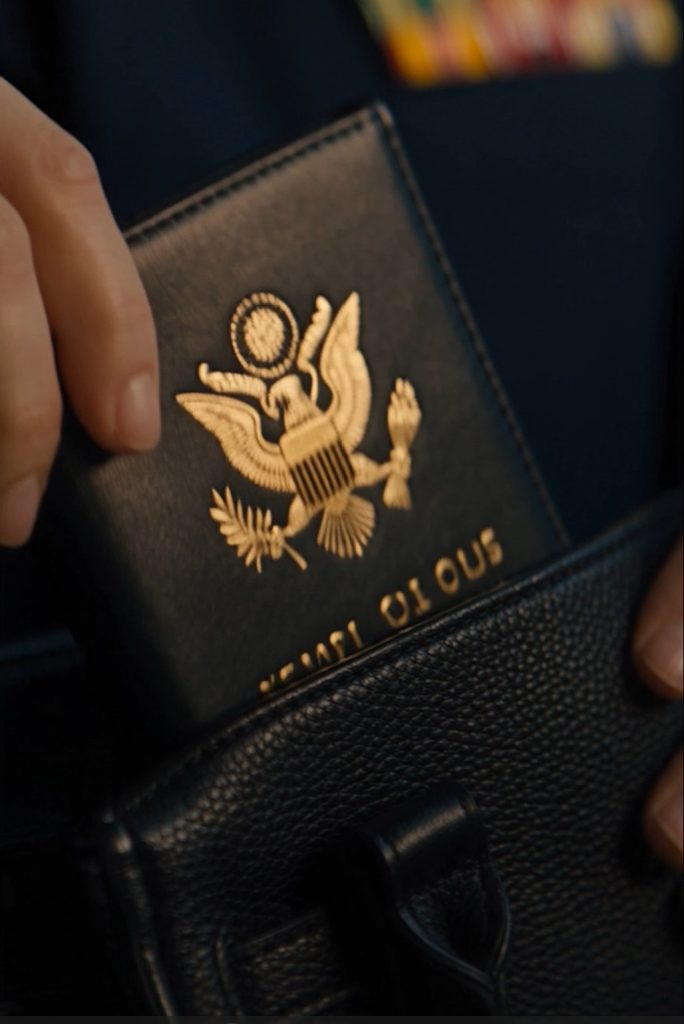
Now, at 6:38 that evening, I reached beneath the lining of my handbag and removed my credential.
The plastic felt cool between my fingers.
The guard accepted it casually.
Then he read my name.
His eyes dropped lower.
To the seal.
To the rank.
Something in his expression changed.
He checked it again.
My mother’s fingers stopped tapping.
The sailor straightened so quickly his shoulders seemed to lock into place.
“Well?” she snapped.
He stepped away from the SUV.
Then his heels came together.
His hand rose in a razor-sharp salute.
Wesley leaned forward.
“What is he doing?”
I said nothing.
I did not smile.
I did not turn toward my mother and finally say everything I had swallowed for twenty years.
The guard hurried into the booth and grabbed the red phone.
“Flag officer at the main gate,” he said, his voice suddenly formal. “Repeat, flag officer on site. Initiate protocol escort immediately.”
My mother laughed again.
This time, it sounded thin.
Uncertain.
“Oh, for heaven’s sake,” she called through the window. “You’ve made a mistake.”
The sailor slowly turned back toward us.
For the first time in my life, my mother looked at me differently.
Not with irritation.
Not with dismissal.
With fear.
The gate alarm clicked.
The red phone went silent.
The sailor stepped toward the open window, looked directly at my mother, and said—
Nobody inside that SUV was prepared for what came next. 👇
“Ma’am,” he said, looking past her and directly at me, “Rear Admiral Hale is expected at headquarters. The commander is on his way to receive her.”
For one second, nothing moved.
My mother’s mouth remained slightly open. Wesley’s hand stayed braced against the back of my seat. Even the air-conditioning seemed too loud.
Then she turned toward me.
“You’re what?”
“An admiral.”
She blinked as if the word might rearrange itself into something less threatening.
Behind the gate, headlights appeared.
A dark staff car rolled toward us. A silver-haired captain stepped out and crossed the pavement with the controlled stride of someone who knew exactly who was waiting.
He stopped at my door and saluted.
“Admiral. Welcome back.”
I returned it.
My mother made a sound in her throat.
The captain glanced at the SUV. “We’ll escort the admiral from here.”
My hand reached for the door handle.
“Wait,” my mother said. “You never told me.”
Before I could answer, Wesley spoke.
“Yes, she did.”
The words landed harder than the salute.
My mother turned around.
Wesley had gone pale, but he did not look away.
“She sent the announcement two months ago. I saw it on your kitchen counter.”
Silence filled the SUV.
I felt something inside me go still.
“You knew?”
Her lips tightened.
“Mom,” Wesley said. “Tell her.”
Outside, the captain looked away, offering us the privacy of pretending not to hear.
My mother stared through the windshield.
“I knew you’d been promoted.”
“And you still said that?”
She closed her eyes.
“I didn’t know what else to say.”
I laughed once without humor. “For twenty years?”
Her shoulders dropped.
“You never needed me,” she said. “You built things. You left. You kept succeeding. Wesley needed help. Your father needed taking care of. Everybody had a place for me.”
“That was your reason?”
“No.”
She finally met my eyes.
“It was my excuse.”
Wesley leaned back.
My mother’s face crumpled for half a second before she forced it still.
“I made you smaller because your life made me feel small,” she said. “Every time people admired you, I told myself I was keeping you humble.”
The heat pressed against the glass.
I had imagined this moment a hundred ways. In every version, I had something sharp enough to return every wound.
Instead, I felt tired.
“I’m taking command tonight,” I said. “There’s a ceremony at nineteen hundred. You and Wesley were on my guest list.”
“Were?”
I looked toward the gate, then back at her.
“You can’t come in.”
The color drained from her face.
Wesley whispered my name, but I lifted one hand.
“This is not revenge. I won’t stand at a podium while the person who spent my whole life erasing me sits in the front row pretending she was proud all along.”
My mother’s chin trembled.
For once, she had no answer.
I stepped out.
The captain closed the door behind me.
The sound was soft.
But it ended something.
At the ceremony, the hangar doors stood open to a violet evening sky. Rows of uniforms filled the folding chairs. Brass gleamed beneath white lights. An aircraft generator hummed somewhere beyond the stage.
When my name was announced, hundreds of people stood.
For one dangerous second, I saw the old kitchen instead—the plastic trophy above the refrigerator, my certificate in my hands, my ship pushed aside for serving dishes.
Then the applause reached me.
Not loud in the way my mother had been loud.
Steady.
Earned.
I took the oath with my voice level.
When it was over, I found Wesley near the back wall.
He had come alone.
“I should have stopped her,” he said.
I waited.
He rubbed his thumb across his phone. “I liked being the one she celebrated. I knew what it cost you, and I liked it anyway.”
That honesty hurt more than an excuse.
“I’m sorry.”
“Don’t apologize because you saw people salute me.”
His eyes dropped.
“Apologize because you laughed in the car.”
His throat moved.
“I’m sorry I laughed.”
That time, I believed him.
Three weeks later, he asked me to meet him at our parents’ house.
I nearly refused.
Then he said he had found something in the garage.
The fluorescent tube above my father’s workbench still buzzed. Dust floated through its white light. Rusted clamps hung from the pegboard, and a coffee can full of bent nails sat exactly where it had when I was ten.
Wesley stood beside a cardboard box.
My mother waited in the kitchen doorway.
She looked older.
Not defeated. Not transformed.
Simply stripped of the certainty she had once worn like armor.
Wesley opened the box.
Inside was my destroyer.
The aluminum hull was scratched. One antenna had broken off. The wiring I had soldered at ten years old had darkened with age.
But it was there.
Under the ship lay my science-fair certificate.
The original.
“Where did you get this?”
My mother answered.
“I kept it.”
I turned.
“When I told you to move the model, you put it in the garage. Later, I boxed it up.” Her gaze fell to the certificate. “I told myself I was saving it because you left things everywhere.”
Her voice broke.
“But I kept everything after that, too.”
Wesley lifted a second folder from the box.
Promotion notices.
Deployment photographs.
A newspaper article with my name circled.
Twenty years of proof.
My mother had hidden all of it.
Not displayed.
Not celebrated.
But kept.
“I was proud of you,” she whispered. “And I hated that I was proud, because every step you took away from me felt like proof that you didn’t need me.”
I looked at the box.
All those years, I thought she had seen nothing.
The truth was worse and better at once.
She had seen everything.
She had simply been too frightened and too jealous to give me what she knew I deserved.
I set the destroyer on the workbench.
“You don’t get credit for loving me in secret.”
She nodded.
“I know.”
“You don’t get to call cruelty love because you saved the evidence afterward.”
“I know.”
The room stayed quiet.
Then she said, “I started seeing someone.”
I frowned.
“A counselor.”
Wesley looked down, already aware.
My mother twisted her wedding ring once.
“I don’t expect forgiveness because I finally became ashamed of who I was. I only want to become someone who doesn’t need her children to be smaller.”
It was the first apology she ever gave me without asking for something in return.
I did not hug her.
Not then.
Healing did not arrive like applause.
It came in smaller sounds.
A phone call she did not turn toward herself.
A birthday card that said only, I am proud of the woman you became.
Wesley stopped letting her turn his victories into comparisons. My father, awkward and quiet as ever, began asking questions about my work and waiting for the whole answer.
Months passed.
Then one Sunday afternoon, I came home to find the kitchen table cleared.
No serving dishes.
No hierarchy.
My mother had placed the old destroyer in the center.
Beside it sat Wesley’s plastic third-place trophy.
Equal distance from the light.
Wesley looked at me and gave a small, embarrassed smile.
My father poured coffee.
My mother did not make a speech.
She simply pulled out the chair beside her.
I stood there for a moment, carrying every version of myself that had once waited to be invited into that room.
Then I sat down.
Outside, evening settled over the windows in soft gold.
Wesley reached across the table and carefully straightened the destroyer’s bent antenna. My mother placed one hand beside mine without touching it, leaving the last inch of distance for me to choose.
This time, I crossed it.
And beneath the old kitchen light, with the little aluminum ship between us, there was finally room for everyone.