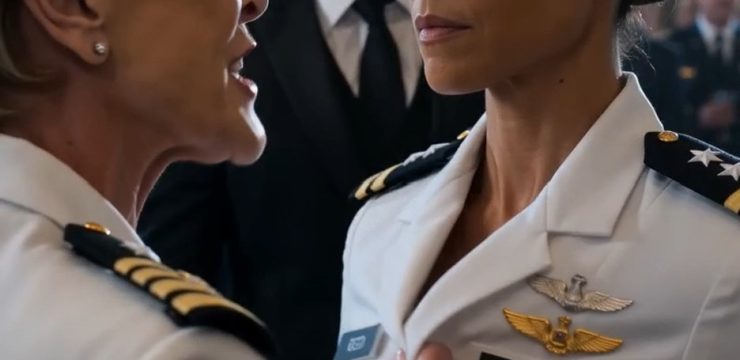
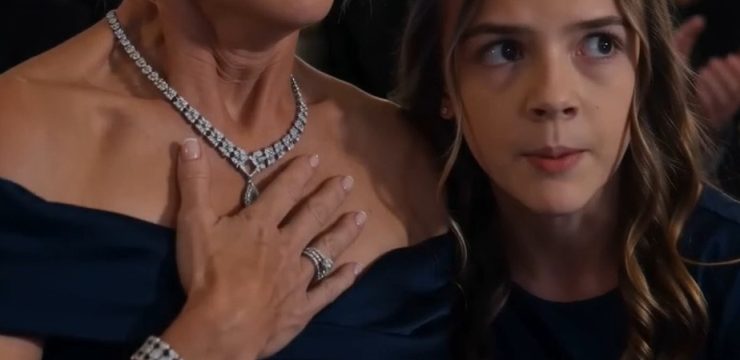
The cafeteria went silent when a major pulled a chair away from an elderly woman and told her she hadn’t earned the right to sit there. No one dared challenge him—not even the officers who knew he was wrong. But when the woman quietly sent a message from her phone, something about her unsettling calm suggested that Major Derek Mason had made a terrible mistake.
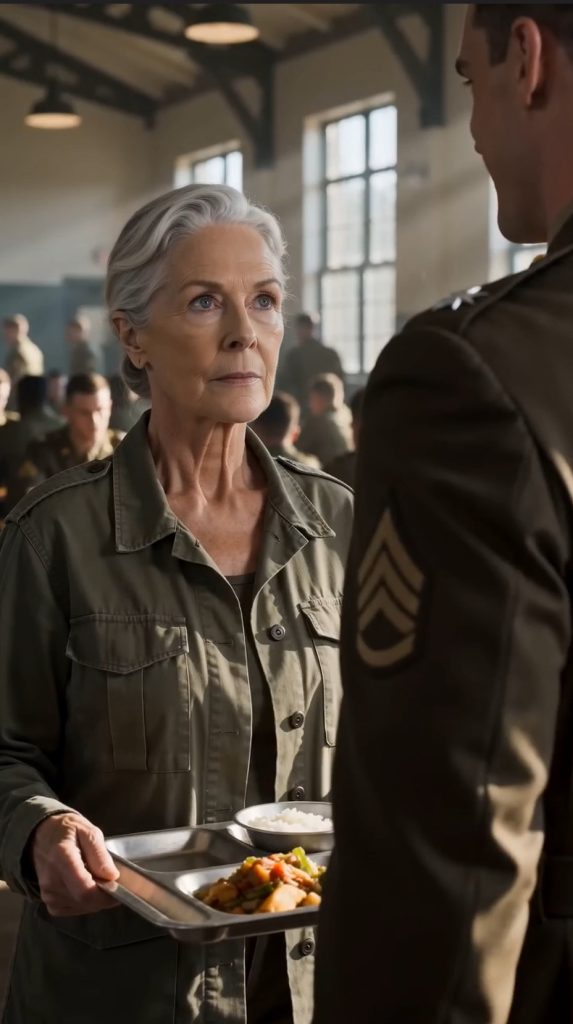
“Move away from this table before you embarrass yourself,” Derek said, gripping the chair Margaret Hayes had been about to use.
Its metal legs scraped sharply against the floor.
Margaret stood beside her untouched lunch, wearing an old brown coat that concealed anything remarkable about her. She looked like an ordinary retiree searching for somewhere to eat.
Derek studied her worn clothing, then glanced at the officers surrounding him.
“This section is for people who’ve earned their place.”
Margaret rested her fingers against the tabletop. “I only need somewhere to have lunch.”
“There’s a table beside the trash return,” he replied, pointing across the cafeteria. “That seems more appropriate.”
A few younger officers laughed. Others forced uncomfortable smiles, unwilling to stand apart from their superior.
Margaret looked around the table. Nobody met her eyes for long.
Then Lieutenant Emily Ross pushed back her chair.
“Please, ma’am. You can have my seat.”
Derek’s expression hardened.
“Lieutenant. Sit down.”
Emily hesitated. “Sir, there’s plenty of room.”
“I didn’t ask for your opinion.”
She slowly lowered herself into her chair.
“And don’t turn my officers’ lunch into some retirement-home charity event.”
The laughter stopped.
For one brief instant, Margaret’s fingers tightened around her tray. Emily noticed the movement—and the effort it seemed to take for Margaret to remain composed.
“Enjoy your lunch, Major,” Margaret said quietly.
Derek smiled. “I always do.”
She walked away alone.
Conversations gradually resumed around her. Forks struck plates, boots crossed the polished floor, and coffee splashed into paper cups.
Margaret reached a small table near the tray-return station. A trash bin stood only a few feet away, its chemical smell mixing with grilled chicken and stale coffee.
She sat down without complaint.
Across the room, Derek raised his voice.
“Some people retire and still can’t accept that they don’t matter anymore.”
This time, nobody laughed.
Margaret unfolded her napkin, reached into her coat, and withdrew a plain black phone.
She typed a short message.
Emily saw it. So did Derek.
“Probably complaining to somebody’s secretary,” he muttered to Captain Luke Harris.
Luke managed a weak smile.
Margaret turned the phone face down and picked up her fork.
But Emily couldn’t stop watching her.
There was something deeply unsettling about the older woman’s composure. She didn’t appear defeated or even angry.
She looked disappointed.
And somehow, that was harder to witness.
Emily had encountered civilians demanding special treatment and retired soldiers insisting on recognition. Margaret seemed interested in neither.
Instead, she studied the cafeteria with quiet precision.
Her eyes moved from the serving line to the junior officers, then returned to Derek. Her food remained almost untouched.
It wasn’t the behavior of someone intimidated.
It was the behavior of someone assessing a situation.
Derek caught Emily looking.
“Something fascinating over there, Lieutenant?”
“No, sir.”
“Good. Distracted officers tend to remain lieutenants.”
Emily stared at her plate.
She had spent six months waiting for Derek’s recommendation. Her next assignment depended partly on his approval.
He knew exactly how much power that gave him.
And he wasn’t afraid to use it.
Near the trash return, Margaret could hear every word.
Derek resumed talking, casually mocking a sergeant who had questioned his scheduling decisions. Then he ridiculed a captain for requesting family leave.
Finally, he began criticizing a warrant officer who had refused to take an unsafe shortcut during training.
Margaret’s fork stopped moving.
Her gaze lifted toward Derek.
And as he continued speaking, unaware of how closely she was listening, Margaret slowly reached for the black phone again.
Whatever she had begun with that first message wasn’t finished. 👇
Her thumb hovered over the screen as Derek’s voice carried across the room.
“People who question my orders don’t belong in uniform,” he declared. “That warrant officer should be grateful I haven’t destroyed his career.”
Margaret lowered her eyes and typed three more words.
Then she placed the phone beside her untouched lunch.
At the officers’ table, Luke shifted uncomfortably.
“Sir, that training concern was legitimate,” he said quietly. “The equipment hadn’t passed its inspection.”
Derek stopped chewing.
For several seconds, he simply stared at Luke.
“Are you correcting me, Captain?”
Luke’s expression tightened.
“No, sir. I’m saying there were documented safety concerns.”
Derek leaned closer.
“Then perhaps your next performance evaluation should reflect your difficulty understanding command authority.”
Luke fell silent.
Margaret watched him lower his gaze, just as Emily had done moments earlier.
Then the cafeteria doors opened.
Two military police officers entered, followed by a silver-haired brigadier general whose expression was unusually severe.
Conversations faded.
Derek straightened immediately.
“General Whitmore,” he said, rising. “Sir, I wasn’t informed you were visiting.”
General Thomas Whitmore barely acknowledged him.
His eyes moved across the cafeteria until they found Margaret sitting beside the trash return.
Then he walked directly toward her.
Derek followed, visibly confused.
“Sir, can I assist you with something?”
Whitmore stopped beside Margaret’s table.
For one long moment, neither spoke.
Then the general stood at attention.
“General Hayes. I received your message.”
The silence was immediate.
Emily’s fork slipped from her fingers.
Luke stared at Margaret as though he were seeing her for the first time.
Derek’s face drained of color.
Margaret slowly rose.
“Thank you for coming, Thomas.”
General Whitmore nodded.
“Ma’am, the review team is assembled. We can begin whenever you’re ready.”
Derek swallowed.
“General Hayes?”
Margaret turned toward him.
“Retired General Margaret Hayes,” Whitmore said firmly. “Former commanding officer of this installation and senior adviser to the military leadership review board.”
Derek opened his mouth, but no sound emerged.
Margaret looked around the cafeteria.
“Please sit down, everyone.”
Nobody moved.
Her voice softened.
“That’s an instruction, not a request.”
Chairs shifted cautiously.
Only Derek remained standing.
“Ma’am,” he began, “there appears to have been a misunderstanding.”
Margaret studied him.
“Which part, Major?”
He glanced toward the trash return.
“I had no idea who you were.”
“I know.”
His shoulders relaxed slightly.
Then Margaret continued.
“That’s what concerns me.”
Derek’s relief vanished.
“Would you have treated me differently if I’d been wearing my uniform?”
He hesitated.
“Of course, ma’am.”
Margaret nodded slowly.
“Then you’ve understood the problem perfectly.”
General Whitmore placed a thin folder on the table.
Inside were written complaints, training reports, and statements collected over several months.
Derek stared at the documents.
Margaret hadn’t arrived by accident.
She had been invited to observe conditions at the installation after repeated complaints about intimidation, retaliation, and compromised safety decisions.
Her unannounced cafeteria visit had been part of that review.
But the incident at lunch had revealed something the paperwork couldn’t fully capture.
Fear.
Not the fear soldiers feel in combat.
The quieter kind that teaches capable people to remain silent while someone powerful mistreats others.
Margaret turned toward Emily.
“Lieutenant Ross, would you come here, please?”
Emily rose, her hands trembling slightly.
“Yes, ma’am.”
“You offered me your chair.”
Emily glanced at Derek.
“Yes, ma’am.”
“And then you sat down when you were ordered to.”
Emily’s eyes filled.
“I should have done more.”
Margaret waited before answering.
“You were placed in a position where doing the decent thing threatened your career. That’s not a failure leadership should ever demand of you.”
Derek stepped forward.
“Ma’am, Lieutenant Ross has a history of questioning—”
“Major.”
Margaret’s voice never rose.
But he stopped instantly.
“She can speak for herself.”
Emily drew a shaky breath.
For six months, she had swallowed objections, rewritten reports, and watched colleagues retreat into silence.
Now every instinct told her to protect herself again.
She looked toward Derek.
Then toward Margaret.
“Ma’am, Major Mason has threatened my next assignment repeatedly. He’s made it clear that disagreeing with him will affect his recommendation.”
Derek shook his head.
“That is a complete misrepresentation.”
Luke stood.
“No, sir.”
Everyone turned.
His voice was unsteady, but he continued.
“I heard those threats. I’ve heard similar ones made to other officers.”
Derek stared at him.
“Captain Harris, consider very carefully what you’re saying.”
Luke’s jaw tightened.
“I’ve been doing that for months, sir.”
Margaret opened the folder.
“Major Mason, these allegations include retaliation against officers who raised safety concerns, interference with evaluations, and pressure to proceed with training before required inspections were complete.”
Derek’s expression changed.
Not to remorse.
To calculation.
“Those allegations have never been proven.”
“That’s correct,” Margaret replied. “Which is why they are being investigated.”
Whitmore stepped beside her.
“Major, effective immediately, you are relieved of command pending the completion of that investigation.”
Derek’s breathing became shallow.
“You can’t remove me based on cafeteria gossip.”
“No,” Whitmore answered. “We’re acting on documented concerns and the command review already underway.”
Then Derek made his final mistake.
He turned toward Emily.
“This is your doing.”
Emily flinched.
“You think they’re going to protect you forever?” he demanded.
“That’s enough,” Whitmore said.
But Margaret lifted one hand.
“Let him finish.”
Derek looked around the room.
For the first time, nobody lowered their eyes.
Luke remained standing.
Emily held her ground.
Even the younger officers who had laughed earlier sat motionless, watching him.
His authority had depended on their fear.
And suddenly, it was gone.
Derek looked back at Margaret.
“I served this country for twenty-two years.”
“So have many people in this room,” she replied. “Service deserves respect. It does not excuse cruelty.”
The military police escorted Derek from the cafeteria.
His footsteps echoed against the tile.
No one applauded.
No one celebrated.
They simply watched the doors close behind him.
And in the silence that followed, Emily began to cry.
She turned away immediately, embarrassed.
Margaret approached her.
“Lieutenant.”
Emily wiped her face.
“I’m sorry, ma’am.”
“For what?”
“For being frightened.”
Margaret glanced toward the closed doors.
“Courage isn’t the absence of fear, Emily. Sometimes it’s deciding that fear will no longer make every decision for you.”
Luke approached them slowly.
“I should have spoken up sooner,” he said.
Emily looked at him.
“Yes,” she whispered. “You should have.”
Luke accepted the words without defending himself.
“I know.”
Margaret watched their exchange.
It was uncomfortable, imperfect, and necessary.
Later, investigators reviewed the reports that officers had previously been afraid to submit.
Emily provided her account.
Luke acknowledged the occasions when he’d remained silent.
The warrant officer’s training concerns were independently verified, and the unsafe shortcut was formally prohibited.
The reviewing authorities also found evidence that Derek had improperly influenced evaluations and retaliated against personnel who challenged his decisions.
He was permanently removed from his command position and faced further disciplinary action through the military process.
For Emily, the most important news arrived in a plain envelope.
Her assignment had been reviewed independently.
She had earned the recommendation.
No favor.
No exception.
Just the opportunity her work deserved.
When she showed Margaret the letter, her voice broke halfway through reading it.
Margaret smiled.
“Congratulations, Lieutenant.”
Emily folded the paper carefully.
“I’m still angry that I let him silence me.”
“You’ll remember what happened,” Margaret said. “The question is what you’ll do differently when someone else needs you.”
Luke eventually apologized to the sergeant, the captain who had requested family leave, and the warrant officer whose safety warning he’d failed to defend.
Not everyone accepted his apology immediately.
He didn’t ask them to.
Instead, he helped establish a process allowing junior personnel to raise concerns without reporting through the officer involved in their complaint.
It was a small beginning.
But it was real.
Several weeks later, Margaret returned to the cafeteria.
She wore the same old brown coat.
Emily spotted her immediately and waved her over.
Luke was sitting nearby with several younger officers.
There was an empty chair beside Emily.
Margaret approached it, smiling.
“Is this seat taken?”
Emily stood.
“No, ma’am. It’s yours.”
Margaret paused.
Then she quietly shook her head.
“Sit down, Emily. You don’t have to surrender your chair to show respect.”
Emily laughed softly.
“There’s another one right here.”
She pulled out the empty chair.
Margaret sat beside her.
For a while, they ate and talked about ordinary things—Emily’s new assignment, Luke’s children, and the coffee that somehow tasted worse every week.
Then Emily noticed Margaret studying the room.
“Ma’am, can I ask you something?”
“Of course.”
“Why did you come here wearing that coat?”
Margaret looked down at the faded brown fabric.
For the first time, her expression grew distant.
“It belonged to my husband.”
Emily became still.
Margaret smoothed one worn sleeve.
“He served here many years ago. After he retired, he used to visit this cafeteria and eat lunch with soldiers who had nobody else to sit with.”
Her voice softened.
“He believed a person’s worth should never depend on the insignia on their shoulders.”
Emily looked toward the tables.
Margaret continued.
“Before he died, he told me that if I ever wanted to understand the character of a military unit, I should watch how its people treated someone they believed couldn’t do anything for them.”
Emily’s eyes glistened.
“So you came to see whether people still remembered that?”
Margaret shook her head gently.
“No. I came because people had been asking for help, and I needed to understand what they were facing.”
She touched the sleeve again.
“The coat simply reminded me what to look for.”
Emily reached across the table and rested her hand over Margaret’s.
For a moment, neither spoke.
Then Luke returned from the serving line carrying an extra cup of coffee.
He placed it beside Margaret.
“No charge, ma’am,” he said.
Margaret raised an eyebrow.
“Captain, I hope that’s not special treatment.”
Luke smiled.
“No, ma’am. I bought one for everybody.”
Margaret looked around.
At the nearby table, a young soldier sat beside an elderly civilian visitor, helping him open a stubborn packet of sugar.
Nobody questioned why he was there.
Nobody asked what rank he’d once held.
Sunlight poured through the cafeteria windows, warming the polished floor.
Emily continued telling a story about her upcoming assignment while Luke laughed into his coffee.
And Margaret, wrapped in her husband’s old brown coat, finally finished a lunch surrounded by people who had learned that the most important place at any table was the one they made for someone else.